
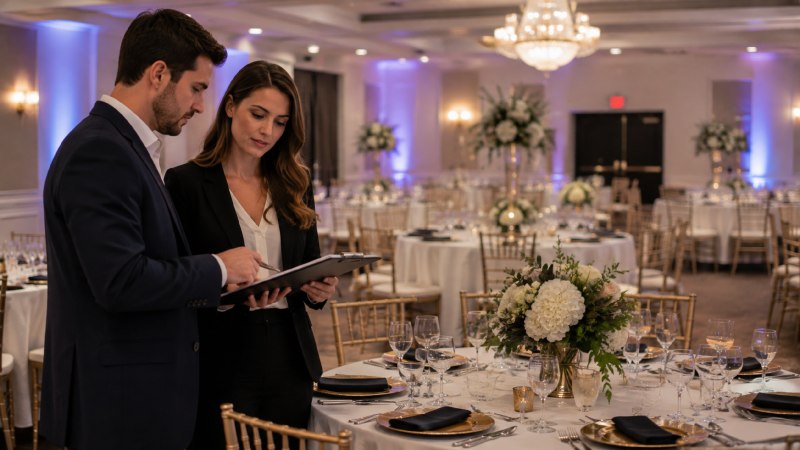
Booking a venue feels like the hard part is over. You’ve found a room that looks right, the date is free, the price is survivable, and there’s a contract in your inbox waiting for a signature. The relief is real.
Then the questions start arriving, usually about a week out, and most of them are about the room rather than the party. The commercial stackable banquet chairs are matched and in good condition, the layout has been done before, and somebody can tell you the real capacity without checking a file. Venues that get this right have thought about all of it already, and it shows in exactly those small ways. Venues that have not will hand you a room and let you discover the gaps yourself.
Six questions, asked before signing, save most of that.
What Is the Real Capacity for My Layout?
A venue will quote you one number, and it usually assumes the most flattering arrangement.
Capacity changes completely depending on what goes in the room. Fire codes calculate it from floor area and use, and a space set with tables and chairs is allowed far fewer people than the same space set with chairs alone. NFPA’s guidance on how occupant load gets calculated puts assembly space with tables and chairs at 15 net square feet per person. Rows of chairs with no tables run at 7.
So ask for the number that applies to your setup, not the headline. A room that holds 120 standing might hold 70 seated at rounds, and 70 is the number your guest list has to fit.
Who Sets the Room, and When?
This is the question that quietly decides how your morning goes.
Some venues set the room for you and it’s included.Set it and charge. Some hand you a stack of tables and expect it done by the time the caterer arrives. All three are fine as long as you know which one you signed up for, and the agreement is where that gets settled.
Ask what time you can get in. Then ask what time the previous booking gets out, because those are frequently the same hour, and that is where the day goes wrong.
Can I See the Chairs?
Almost nobody asks this, and everybody notices the answer.
Chairs are the thing your guests touch for three hours. If they are mismatched, wobbly, or upholstered in something that has clearly had a long career, that is the room your photographs are taken in. Ask to see the actual seating rather than the website gallery, because website galleries are often from the year the venue opened.
Sit in one for a few minutes while you’re there. If it’s uncomfortable at minute four, it will empty your room by hour two.
While you’re sitting, look at the floor under the chair. Glides that have worn through to bare metal scrape, and a room of eighty scraping chairs is a room where nobody can hear the speeches. It’s a small thing that tells you how closely the venue watches its own equipment.
What Happens If Someone Needs a Different Kind of Seat?
Every guest list has somebody who needs something, and it’s rarely the person you expected.
Ask how the venue handles a wheelchair user, a guest with a walker, or an older relative who cannot manage a low seat. Ask specifically about the route from the entrance to the table, rather than only whether the building is accessible. A building can be accessible while a room is still impassable once it’s full of furniture and people. The federal guidance on accessible routes exists because that gap between building and room is where things break down.
A venue that answers this easily has done it before. One that hesitates will improvise on the day, in front of your guests.
Is Anything Here Meant for Children?
If the party involves children, this matters more than the decor does.
Ask whether they have high chairs or booster seats, how many, and when they were last checked. Ask whether the seating gets inspected. Venue furniture carries real regulation behind it, and the CPSC publishes the requirements for upholstered furniture in full, including the flammability testing that applies to anything padded in the room.
You’re not being difficult. You’re asking a business about its equipment.
What Is Not in This Price?
Save the money question for last, because by now you know what you’re asking about.
Setup and teardown, linen, chair covers, extra hours, cleaning, damage deposit, whether the deposit covers normal wear, and what counts as normal. Get the list in writing. The gap between the quoted price and the final invoice is almost always made of small line items nobody mentioned, and every one of them is easier to negotiate before signature than after.
If you only keep one page from all of this, keep the questions themselves:
- What’s the capacity for my layout, not the headline number?
- Who sets the room, and what time can I actually get in?
- Can I see and sit in the chairs I’ll be given?
- What’s the route to accessible seating once the room is full?
- What condition is the children’s seating in, and when was it checked?
- What’s excluded from this price, in writing?
What Signing Well Actually Feels Like
The difference between a good venue booking and a stressful one is rarely the venue. It’s how much you knew before you committed.
Ask the six, write down the answers, and attach them to the agreement. A venue that answers all six clearly is telling you they run this room every week and nothing you have asked is new. A venue that gets vague around capacity or seating is telling you something too. That’s worth hearing before the deposit clears, rather than on the morning of the party in a room that turns out to hold fewer people than you invited.