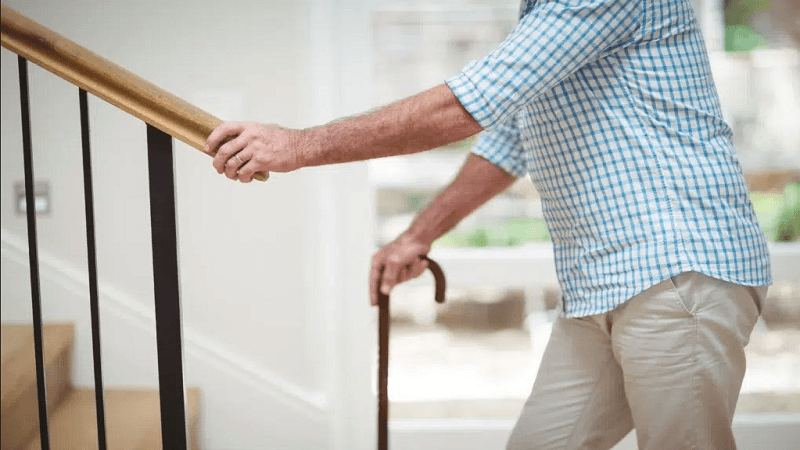
Most families do not have a formal conversation about what happens when a parent starts struggling at home. Instead, it unfolds gradually. A fall. A near-miss on the stairs. A phone call where a parent mentions that getting to the bedroom has become harder than it used to be.
By the time the conversation happens in earnest, the situation has often been developing quietly for months. The parent has been managing, or avoiding, and the adult children have been choosing not to notice. That pattern is common, and it is worth interrupting before something serious happens.
What the Conversation Actually Looks Like
Bringing up home safety with an aging parent is uncomfortable for a predictable reason: it touches on independence, and most people resist the suggestion that they need help before they feel they do. The approach that tends to work is practical rather than emotional.
Instead of framing it as “we’re worried about you,” a more productive starting point is: “What parts of the house have been harder to use lately?” Most parents will answer honestly when asked directly. The stairs come up more often than anything else.
From there, the conversation can move toward specific options rather than abstract concerns. What can be changed? How disruptive would it be? What would it cost?
The Staircase Problem Has a Practical Solution
For parents living in multi-storey homes, stairs are usually the single biggest safety risk. They are also the most solvable one. A stairlift can be installed without structural changes to the home, folds flat when not in use, and runs on battery backup so it works during power outages.
The type of stairlift that fits depends on the staircase. A straight staircase is the simpler case. A staircase with a bend, a turn, or a landing mid-flight needs a custom solution. A stairlift with a curve is built to the exact dimensions of that specific staircase, which means a professional assessment is the right first step.
Summit offers free home assessments across Ontario and can usually complete the installation within a day. For families who are dealing with urgency after a fall or a hospital discharge, that turnaround is significant.
What Families Often Underestimate
The cost of doing nothing tends to be higher than families expect. A fall that results in a hip fracture, emergency care, and a rehabilitation stay can cost far more in financial and emotional terms than a stairlift would have. In-home care rates are also rising. The math often favours the modification.
There is also the question of what a parent loses when they can no longer reach part of their own home. For someone who has lived in the same house for 30 or 40 years, being cut off from the upstairs, or from the bedroom they have slept in for decades, is a significant quality-of-life issue. It accelerates a sense of decline that is often avoidable.
Starting Before There Is an Urgent Reason
The families who handle this most smoothly are usually the ones who started the conversation before a crisis made it urgent. A stairlift installed as a precaution, when there is time to research options and compare quotes, is a better outcome than one purchased in a hurry after an incident.
If the stairs in your parent’s home are a concern, even a low-level one, it is worth getting an assessment now. The information is free and the conversation is easier when nothing has gone wrong yet.