The first time you start shopping for an electric bike, the categories can feel overwhelming. Cargo, city commuter, fat bike, folding, mountain, dirt, food delivery, tricycle. Each one promises to be the right answer. The reality is that most riders are best served by one or two categories, and the rest of the lineup is for someone else entirely. Picking the right one up front saves a lot of frustration and money.
The good news is that the right category usually becomes obvious once you think about the actual riding you do. Not the riding you wish you did, not the imagined adventure you might take next summer, but the everyday trips that will make up the next two to five years of riding. Start there, and the choice almost makes itself.
If you are starting your research, browsing the Epic Cycles e-bike collection is a good way to get a sense of how each category actually looks and what the going prices are. A knowledgeable dealer can also walk you through fit, sizing, and the practical differences that matter more than spec sheets suggest. The category names start meaning something real when you sit on a few different bikes.
Why e-bikes are growing this fast
Canadian interest in e-bikes is part of a much broader shift. A recent survey by the Canadian Climate Institute found that 77 percent of Canadians express concern about climate change, which is one of several factors driving demand for sustainable transportation alternatives. Combined with rising fuel costs, urban congestion, and dramatically improved e-bike technology, the category has moved from niche to mainstream in under a decade.
Start with the question: how far and how often?
Two questions answer most of the category decision:
How far is your typical ride? Under 5 km changes the calculation entirely versus 15 km or 30 km. Range requirements drive battery size, which drives weight, which drives price.
How often do you ride? Daily commuters need bikes that hold up to constant use. Weekend recreational riders can prioritize different features like comfort and weather flexibility.
Add a third question for honest answers: what are you replacing? A car trip you currently drive to work. A second car you don’t really need. A subway commute that takes too long. A weekend recreation activity. The answer shapes everything else.
City commuter: the most popular starting point
If you are looking for a daily replacement for short-to-medium urban trips, a city commuter e-bike is usually the right answer. These are designed for paved roads, smooth bike paths, and predictable urban riding.
Look for: upright riding position, reliable hub or mid-drive motor in the 250 to 500W range, 60 to 80 km of real-world range, hydraulic disc brakes, integrated lights, fenders, and a rear rack for groceries or work bags. Speed top-outs at 32 km/h (the legal limit for most Canadian e-bikes).
Best for: commuters under 20 km each way, errand running, light recreational rides.
Cargo: the car replacement
Cargo e-bikes are the genuine surprise category of the last few years. With one of these, you can run grocery trips, school drop-offs, hardware store runs, and small business deliveries that previously required a vehicle. The category has matured to the point where many families with one cargo e-bike find they barely use their second car.
Look for: long wheelbase or front-cargo design, robust motor (500W minimum, often more), heavy-duty wheels and brakes, secure cargo platform or front box, child-seat compatibility if applicable. Range can be lower than commuter bikes because trips are shorter but loads are heavier.
Best for: families with kids, anyone who carries serious gear regularly, small businesses doing local deliveries.
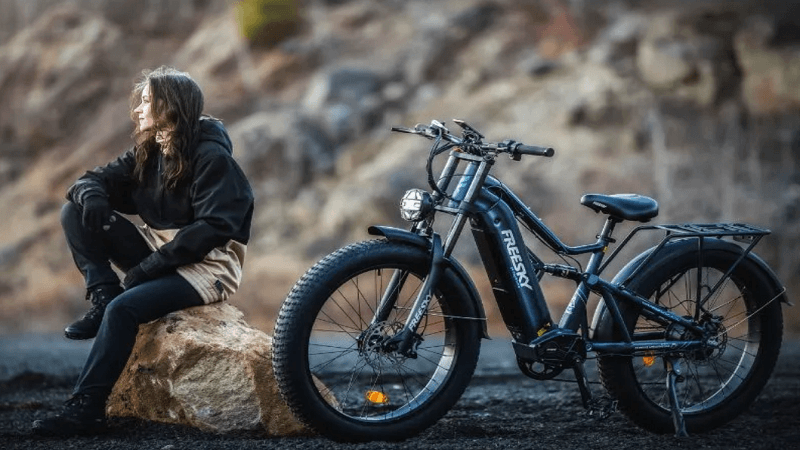
Fat bike: the four-season Canadian option
If you want to ride year-round in Canadian weather, a fat-tire e-bike opens up months that traditional bikes effectively shut down. The oversized tires handle snow, ice, sand, and rough terrain that would stop a regular bike cold.
Look for: 4-inch or wider tires with appropriate tread, motor capable of handling the extra rolling resistance (500W+), strong battery (cold reduces range), upright riding position, hydraulic disc brakes that work in cold weather.
Best for: year-round commuters in snowy regions, riders who want one bike for everything, off-road and adventure riders.
Folding: the apartment and transit option
Folding e-bikes solve specific problems: living in a small apartment without storage, taking the bike on transit, putting it in a car trunk, bringing it to the office. The trade-off is generally a heavier bike than equivalent non-folding models because of the hinge mechanism.
Look for: solid folding mechanism that locks securely, reasonable folded size, manageable weight (under 25 kg if you are carrying it regularly), reliable performance once unfolded.
Best for: condo and apartment dwellers, multimodal commuters, anyone with limited storage.
Mountain: the off-road specialist
Electric mountain bikes are for actual off-road trail riding, not for looking sporty on the way to work. The geometry, suspension, and component choices are optimized for trails, which makes them less comfortable for typical commuting.
Look for: full suspension or quality front suspension, mid-drive motor for better handling, knobby tires sized for terrain, robust frame, dropper post on higher-end models.
Best for: dedicated trail riders, people who already mountain bike regularly, anyone whose actual rides involve dirt.
Tricycles: stability and accessibility
Electric tricycles are a smaller category but the right answer for specific riders. The three-wheel design provides stability that matters for riders with balance challenges, older riders, or anyone carrying significant cargo who values not having to balance a heavy load.
Look for: low step-over frame, large basket or cargo capacity, stable wheel base, reliable motor with low-speed control.
Best for: older riders, riders with mobility considerations, commercial use cases.
Don’t over-buy
It is tempting to buy more bike than you need. The 750W bike feels more impressive than the 350W bike on a test ride. The 100 km range looks better than the 60 km range. The fat tires look more versatile than smart commuter tires. But more capability often means more weight, more cost, and more compromises in the riding you’ll actually do.
The right e-bike for most people is the one that matches their actual life. Pick that, and the joy of riding takes care of itself.