
A new fence can add privacy, define an outdoor space, improve safety, and give a yard a more finished appearance. Homeowners considering https://furlongfence.com/residential-fence-installion-cincinnati/ should begin with a plan that accounts for both the visible design and the conditions below and around the fence line.
The strongest projects are rarely the ones chosen from a photo alone. Property boundaries, drainage, gates, pets, local approvals, material upkeep, and access for installation all influence whether a fence works well for years or creates unexpected problems.
Start With the Purpose of the Fence
Before choosing panels, colors, or post caps, identify what the fence must accomplish. Privacy, pet containment, child safety, garden protection, curb appeal, and defining a patio area can all call for different designs. Rank your priorities. A tall, solid fence may provide screening but reduce views and airflow, while an open aluminum or chain link fence may preserve sightlines without offering much privacy.
Questions to Ask First
- Is the primary goal privacy, security, appearance, or containment?
- Will the fence surround a pool, garden, patio, play area, or entire backyard?
- Does it need to block a view, reduce wind, or keep a pet from leaving the property?
Inspect the Yard Before Choosing a Layout
Walk the proposed fence line before committing to a layout. Notice slopes, retaining walls, patios, sheds, driveways, large trees, and tight side yards. Visit the area after rain if possible, since wet spots and runoff paths can affect post placement. Also consider how workers, materials, and equipment will reach the backyard without damaging landscaping or hard surfaces.
Record approximate fence lengths, grade changes, low areas, root zones, and existing structures. Look from inside the home and from the yard. The best line on a sketch may block a preferred view, make maintenance harder, or leave an awkward, narrow strip of lawn.
Check Cincinnati Rules and Approval Needs
Do not assume that a fence permitted in one neighborhood will work on every property. Height, opacity, front-yard placement, historic-district status, driveway visibility, and gate direction can affect approval requirements. Review the current Cincinnati fence rules as a starting point, then verify the details that apply to your address before ordering materials.
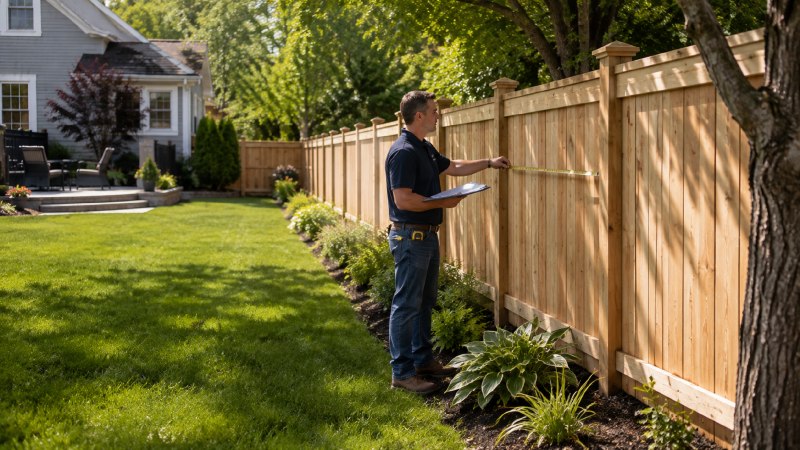
A candid, photorealistic lifestyle photo of a Cincinnati homeowner walking the backyard fence line with a measuring tape and simple notes, observing a sloped yard, trees, and a damp low spot in natural overcast light.
Gather a property survey or plat, review HOA rules if they apply, and identify easements for utilities or drainage. A fence should remain on your property, including posts and footings. If boundaries are uncertain, resolve the question before installation rather than relying on assumptions, existing landscaping, or a neighbor’s fence.
Match the Material to the Property
Each common fence material has useful tradeoffs. Wood offers a traditional look and design flexibility, but it requires periodic maintenance to minimize weathering, rot, and finish wear. Vinyl requires little routine upkeep and maintains a clean appearance, although matching replacement components can matter later. Aluminum provides open views and a refined profile, while chain link is practical and can be softened with screening or landscaping.
Choose based on the desired level of privacy, the yard’s moisture exposure, local style, budget, pets, and the maintenance you are prepared to handle. A material that looks ideal on a flat, sunny lot may need different planning in a shaded or sloped yard.
Plan for Pets, Children, and Privacy
A secure enclosure depends on more than height. Consider openings between pickets, the clearance below the fence, latch placement, and objects that could be used for climbing. Dogs that dig may need a layout that addresses gaps beneath the fence, while small pets may require tighter spacing than larger animals.
Use dependable latches, inspect gates after storms, and keep furniture, firewood, or play equipment away from climbable sections. Privacy panels can help create a calmer outdoor space, but they should not interfere with safe access, visibility near driveways, or drainage.
Place Gates for Real-Life Use
Gates influence how the property functions every day. Think beyond walking access. A narrow gate may be frustrating when moving a mower, trash bins, bicycles, garden supplies, or a wheelbarrow. Consider whether a second gate would make lawn care or service access easier.
Check the gate swing against walkways, steps, parked vehicles, and uneven ground. Leaves, snow, mud, and settling soil can affect the operation over time. Where safety is a priority, self-closing or self-latching hardware may be worth discussing during the design stage.
Account for Soil, Slopes, and Water
Posts and footings must work with the site’s ground conditions. Standing water, erosion, compacted soil, and runoff from roofs or paved areas can contribute to movement and premature repairs. Observe how water travels through the yard, especially along low points and near downspouts.
Before excavation, notify OHIO811 before digging so participating utilities can respond to the planned excavation. Utility locating does not replace careful planning around private lines, irrigation, landscape lighting, or other owner-installed features, so identify those separately as well.
Compare Project Estimates Carefully
A useful estimate explains what is included. Compare total linear footage, fence height, material grade, gate sizes, posts, hardware, old fence removal, site preparation, cleanup, warranty terms, and payment expectations. If two prices are far apart, ask whether both proposals include the same preparation, disposal, and finishing work.
Create a Simple Maintenance Plan
Routine checks can help catch small issues before they become larger repairs. Each season, inspect posts and rails for movement, test gates and latches, clear leaves from the bottom edge, trim plants away from panels, and look for rot, rust, cracks, loose fasteners, or insect damage. Clean and refinish materials according to their specific care needs.
Use a Pre-Installation Checklist
- Define the fence’s primary purpose.
- Confirm property lines and easements.
- Review local, historic-district, and HOA requirements.
- Measure the proposed fence line and note slopes or wet areas.
- Select a material that fits the property and upkeep plan.
- Plan gates around access, safety, and daily use.
- Compare written estimates with matching scopes of work.
- Confirm scheduling, site access, cleanup, and warranty details.
Conclusion
A residential fence is both a design feature and a working part of the property. Taking time to assess the yard, confirm requirements, select suitable materials, plan gates, and prepare for maintenance can prevent avoidable surprises. With a practical plan in place, Cincinnati homeowners can create a fence that supports privacy, access, safety, and long-term enjoyment of the yard.