
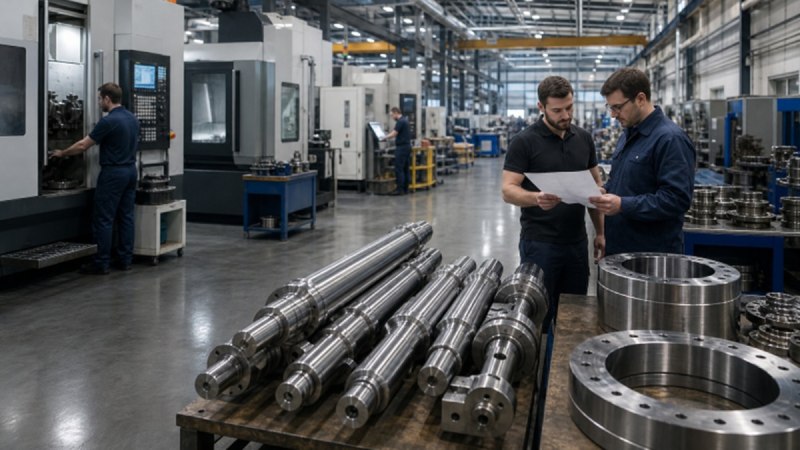
Precision metal parts succeed when material, dimensional control, and surface condition are considered as a single system. A shaft that resists corrosion but wears out too quickly, or a pin made to an unnecessary tolerance, can lead to costs and failures that were avoidable during design. For an example of a corrosion-resistant shaft material used in demanding applications, click here to review a 316 and 316L stainless steel option.
The goal is not to choose the most expensive alloy, the smoothest possible finish, or the tightest possible dimensions. The goal is to specify only what the part needs to perform reliably throughout its intended service life. That approach helps engineering, purchasing, production, and maintenance teams make clearer decisions before a drawing reaches the shop floor.
Why Material Choice Matters
Material selection affects strength, weight, corrosion resistance, machinability, wear, lead time, and replacement frequency. A low-cost carbon steel sleeve may be appropriate for dry indoor machinery, but it could rust quickly in a washdown area. In that setting, a stainless grade or a coated alternative may reduce downtime even if the initial purchase price is higher.
Material decisions also influence the manufacturing route. Tougher alloys may require slower cutting speeds, more robust tooling, additional heat control, or longer inspection time. A sound selection meets the actual load, exposure, and service requirements without adding performance that the application will never use.
Start With the Working Environment
Before comparing alloys, define where and how the part will operate. Ask whether it will see water, salt spray, cleaning chemicals, food residue, abrasive dust, ultraviolet exposure, or process fluids. Consider indoor versus outdoor use, coastal conditions, temperature swings, vibration, shock loading, repeated motion, and contact with other metals.
Corrosion resistance depends on the full environment, not just the alloy name on a purchase order. Crevices can trap moisture, scratches can damage protective surfaces, and dissimilar metals can create galvanic corrosion when an electrolyte is present. Drainage, cleaning practices, assembly design, and coating condition all matter.
Compare Common Metal Options
Carbon Steel
Carbon steel offers useful strength, broad availability, and a lower starting cost. It is often a practical fit for structural components, pins, shafts, and general machinery used in controlled, dry environments. Check whether painting, plating, oiling, or another rust-prevention method is needed.
Stainless Steel
Stainless steel is commonly selected for wet, sanitary, chemical, and outdoor applications because it combines corrosion resistance with cleanability. Grade selection still matters. Some grades machine differently, work harder, or perform better in chloride-rich environments than others.
Aluminum, Titanium, Brass, and Bronze
Aluminum works well when low weight, machinability, or heat transfer is important, although wear resistance and thread strength may need attention. Titanium provides excellent strength-to-weight performance and corrosion resistance, but often adds material and machining cost. Brass and bronze are useful for fittings, valves, electrical components, and bushings because of their machinability, corrosion behavior, and low-friction characteristics.
Set Tolerances by Function
A tolerance is the permitted variation from a target dimension. It should be based on function, not habit. Critical dimensions may control a press fit, a bearing seat, a seal groove, an alignment feature, or sliding movement. Reference dimensions and nonfunctional exterior surfaces usually need less control.
Applying tight tolerances everywhere increases setup time, scrap risk, inspection effort, and cost. The University of Florida’s design-for-manufacturing guidance emphasizes using the loosest tolerances and least demanding finish requirements that still support the design. Use general tolerances for noncritical features, then tighten only the dimensions tied directly to fit, load transfer, motion, or sealing.
Choose the Right Surface Finish
Surface finish is more than appearance. It can influence friction, wear, sealing, corrosion behavior, cleanability, and the consistency with which two parts mate. An as-machined surface may be perfectly acceptable on a noncontact bracket, while a bearing journal or sealing land may need grinding or polishing.
Grinding can improve diameter control and produce a smoother functional surface. Polishing may be useful for cleanability or low-friction contact. Coatings, plating, passivation, and heat treatments can improve corrosion or wear performance, but they may also change final dimensions. The MIT machining physics reference illustrates why material behavior, cutting conditions, tool wear, and part distortion all affect final surface quality.
Balance Performance and Cost
Evaluate the full life-cycle cost rather than the piece price alone. Include raw material, machining time, tool wear, coolant needs, heat treatment, finishing, inspection, certification, shipping, storage, maintenance, and expected replacement frequency. A more durable part can be the lower-cost choice if it prevents recurring shutdowns or service calls.
Over-specification is a frequent cost driver. Requiring premium materials, extremely fine surface roughness, or tight limits on every surface can add expense without improving real-world performance. The best specification is specific where it matters and flexible where it does not.
Build a Clear Part Specification
- State the part’s purpose and its load, motion, alignment, or sealing role.
- Describe the operating environment and likely contaminants.
- Identify the required material and any approved alternatives.
- Define critical dimensions, fits, datums, and the controlling unit system.
- Apply surface finish requirements only to functional areas.
- Specify the need for heat treatment, coating, cleaning, passivation, or deburring.
- State inspection records, material certificates, and traceability requirements.
- Confirm quantity, packaging needs, and delivery expectations.
Inspect and Verify the Finished Part
Inspection should connect directly to the drawing and acceptance criteria. Calipers and micrometers are useful for basic dimensions, while gauges, coordinate measuring machines, and surface roughness testers may be needed for critical features. In-process checks help prevent the release of nonconforming parts, while final inspection confirms compliance with release requirements.
Visual checks matter too. Burrs, scratches, discoloration, tool marks, coating defects, and damaged threads can affect assembly or service life. Verify a first article before a large production run, and control measurement conditions because temperature, calibration, cleanliness, and operator technique can influence results.
Common Design and Sourcing Mistakes
- Choosing a familiar material without reviewing exposure and load.
- Assigning the tightest tolerance to every feature.
- Requesting a polished finish without a measurable roughness requirement.
- Ignoring thickness changes caused by coating, plating, or finishing.
- Allowing material substitutions without a documented approval process.
- Comparing quotes without confirming the finishing, inspection, and certification scope.
- Waiting until production to test-fit and assemble.
Final Checklist for Projects
- Does the material suit the environment and expected service life?
- Does it meet the required strength, wear, and weight targets?
- Are close tolerances limited to critical features?
- Does the surface finish support function rather than appearance alone?
- Have finishing effects on dimensions been considered?
- Are inspection methods and acceptance limits clearly defined?
- Can the specified material be sourced consistently?
- Has the total cost of ownership been considered?
Reliable precision parts begin with clear requirements. When material, tolerance, and surface finish are matched to the real operating environment and function, teams can reduce waste, avoid fit problems, and produce components that perform as intended over time.