Key Takeaways
- Measure rooms and delivery paths before placing an order.
- Choose furniture according to daily routines, not appearance alone.
- Use scale, proportion, and clear walkways to make rooms comfortable.
- Select materials that suit pets, children, sunlight, and cleaning habits.
- Create cohesion by repeating a few colors, shapes, or finishes throughout the home.
Choosing furniture for a Salt Lake City home means balancing personal style with the way each room supports everyday life. Whether you are furnishing a downtown condo, a family home near the foothills, or a light-filled suburban space, the best pieces feel proportionate, useful, and comfortable. Exploring luxury home furniture in Salt Lake City can be a practical starting point when you want lasting materials and a more considered look.
Start with how you actually live rather than trying to recreate a showroom. A well-planned room leaves space to move, accommodates guests when needed, and provides storage for the items that tend to collect in daily routines. The goal is not to fill every open corner, but to make the home easier to enjoy.
Start With the Room, Not the Product
Define the room’s main job before choosing a sofa, table, or cabinet. Ask who uses it, what happens there most often, and what needs to stay within reach. A guest room that also serves as an office may benefit from a sleeper sofa, a storage cabinet, or an adaptable work surface. Modular furniture that can be reconfigured is especially useful when a room’s purpose may change over time.
Measure Before Shopping
Record the room’s length, width, ceiling height, window locations, outlets, vents, and built-in features. Then measure the front door, hallways, stairways, elevator, and any tight turns along the delivery route. A piece can fit beautifully on a floor plan and still be impossible to bring inside.
A Measurement Note to Save
- Room dimensions and ceiling height
- Maximum furniture width, depth, and height
- Doorway and hallway measurements
- Desired clearance around the piece
Use painter’s tape to outline the furniture footprint on the floor. This simple step reveals whether a sectional, bed, or dining table will crowd a walkway.
Plan for Daily Life
Furniture should support the habits already happening in your home. A busy entry may need a bench with concealed storage for shoes and bags. A family room may call for durable upholstery and a large ottoman with softened edges. Consider pets, children, overnight guests, remote work, hobbies, and the amount of maintenance you are realistically willing to do.
Choose Living Room Furniture for Comfort and Flow
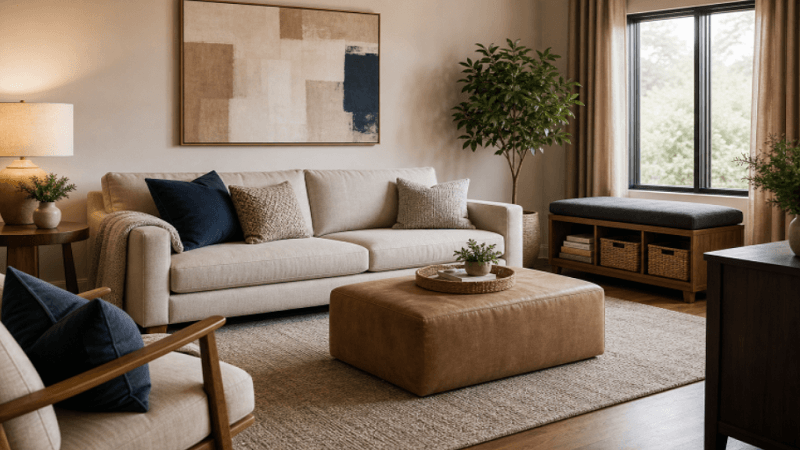
Begin with the main seating piece, then add supporting furniture only after the layout works. A sofa should suit the room’s scale, while chairs and ottomans should create a usable conversation area without blocking circulation. Keep side tables close enough to hold a drink, and choose a coffee table that does not force people to squeeze past it.
Instead of automatically placing every item against a wall, use furniture to define the seating zone when space allows. Basic furniture layout planning principles can help you consider the relationship between wall shapes, major pieces, and visual balance.
Choose Dining Room Furniture for Real Use
Choose a dining table based on regular meals first, then consider holidays and gatherings. Round tables can soften compact spaces, while rectangular tables often work well in longer rooms. Leave enough room for chairs to pull out and for people to pass behind them. An extendable table is a smart option for households that host occasionally, while a sideboard can keep serving pieces, linens, and tableware nearby.
Choose Bedroom Furniture for Calm and Convenience
Place the bed first and clear a walking space around it. Nightstands should be easy to reach from the mattress and provide room for a lamp, phone, or book. Choose dressers, wardrobes, benches, or storage beds according to what must be stored out of sight.
- Can drawers open fully?
- Can doors swing without hitting the bed?
- Is there a safe path to walk at night?
- Is there room for lighting and airflow?
Choose Home Office Furniture for Focus and Support
A productive home office needs more than an attractive desk. Choose a desk with sufficient depth for a monitor, keyboard, and writing space, then select a chair that feels supportive during longer work sessions. Keep frequently used supplies within reach, manage visible cords, and check where daylight falls before positioning a screen. In smaller homes, a compact desk, wall shelving, or nesting table can make the work zone less permanent after hours.
Use Storage to Reduce Clutter
Match storage to the items it must hold. Closed cabinets are helpful for visual calm, while open shelving works best for books, attractive objects, or frequently used pieces. Place storage near the activity it serves: media storage by the television, a console near the entry, and linens near bedrooms or bathrooms. If an everyday item has no convenient place to go, it will likely remain out.
Compare Materials and Finishes
Wood, metal, glass, leather, and fabric each create a different look and require different care. In sunny Salt Lake City rooms, consider how direct light may affect upholstery and finishes over time. Choose surfaces that match your household: easy-clean upholstery for frequent use, sturdy wood for warmth, and glass only where fingerprints and cleaning won’t be a frustration. Mix materials for depth, but repeat a single dominant finish or color to keep the room cohesive.
Avoid Common Furniture Mistakes
- Buying before measuring the room and the delivery route.
- Choosing oversized pieces based on showroom displays or online photos.
- Forgetting outlets, lighting, storage, and walking paths.
- Using many undersized pieces instead of one properly scaled anchor piece.
- Prioritizing a matching set over comfort, function, and visual variety.
- Buying for an imagined lifestyle rather than current routines.
Use a Final Buying Checklist
- Measure the room and the delivery path.
- Write down the room’s primary purpose.
- Identify the people, pets, and activities the piece must support.
- Choose the largest anchor piece first.
- Review dimensions, clearance, materials, assembly, and return terms.
- Confirm that the new piece works with existing colors, finishes, and proportions.
Choose Pieces That Make Everyday Life Easier
The most successful furniture choices create rooms that feel natural to use. When scale, storage, comfort, and circulation are handled well, a Salt Lake City home can feel polished without becoming overly formal. Select fewer, better-fitting pieces, leave room to move, and let your furnishings reflect the way you live now.