
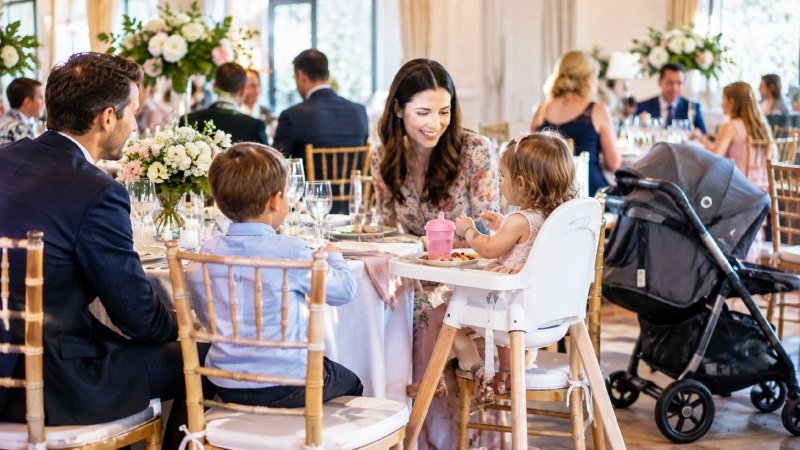
A wedding RSVP may count two adults and one child, but that does not tell the planner how many chairs to place at the table. The child might use a standard chair, a venue high chair, an approved booster, or no chair because the family needs space for a pram beside a caregiver. If the floor plan treats every name as the same type of seat, setup changes begin just as guests arrive.
Families also use a reception differently from adults attending alone. A parent may need to leave during dinner, reach a changing area, settle a tired child, or step outside during speeches. Seating them in the centre of a crowded room can turn every short trip into a disruption. Putting all families in a distant corner creates a different problem: they feel separated from the celebration.
The right plan begins with specific information from parents. It then separates child equipment from the chair order, places family tables around real movement needs, and uses a separate kids table only when the children are ready for it. This approach helps parents participate while giving children a place that suits their stage and routine.
Ask Parents What Each Child Will Actually Use
Do not rely on age alone. Two children of the same age may use different seating at meals, and the parents know which arrangement works for their child. The RSVP should ask what the family expects to use rather than forcing the planner to guess from a birth year.
Request the name of each child and a simple seating selection. Options might include a standard chair, a venue-provided high chair, space beside the table for a pram, or another arrangement that needs a direct conversation. If the venue offers approved child seating, specify what is available instead of using a vague phrase such as “child seat.” A high chair and a booster are different products and may require different space.
Ask about meals separately. A toddler who sits with a parent may still need a child meal, while an older child may eat the standard menu. Dietary requirements should identify the child by name so the kitchen list and seating plan match. The equipment count, meal count, and guest count are related, but they are not interchangeable.
Give parents room to add one short practical note. A family may need the pram kept beside the table because the baby is likely to sleep. Another may prefer to store it in a designated area once the child is seated. A child with a mobility requirement may need a specific route or more space. The planner does not need a detailed family history, only the information required to make the place usable.
Confirm the arrangement again before the final vendor deadline. Children change quickly, and a seating choice made months before the wedding may no longer be suitable. Ask parents to review the recorded plan rather than submitting the whole RSVP again. This reduces conflicting versions.
Avoid promising equipment until the venue or supplier confirms it. “We will have a high chair” should mean a suitable product has been counted, reserved, and assigned. It should not mean someone plans to find one on the morning of the reception. If the requested item is unavailable, tell the family early enough to discuss an alternative with the venue.
Assign one person to manage these details. Parents should not need to contact the couple, planner, venue, and caterer separately. A single coordinator can maintain the approved list and pass only necessary information to each vendor. On the day, that same list should show the child’s table, meal, seat type, and any space that must remain open.
Count Child Seating Separately From the Adult Chair Order
Start the furniture count with adult chairs, then create separate totals for high chairs, approved booster arrangements, wheelchair or mobility spaces, and places where no chair should be installed. This prevents a common setup error: a rental chair is placed at every name on the seating chart, leaving no room for the child equipment arriving from the venue.
If table six has eight listed guests but one child will use a high chair, it may need seven adult chairs and one high chair rather than nine pieces crowded around the table. If a pram must stay beside a caregiver, the floor plan also needs the occupied footprint and a clear route to it. Removing a chair is only part of that adjustment.
Adult chair orders should identify the exact product rather than a general style. In Thai rental catalogues, เช่าเก้าอี้ชิวารี means “Chiavari chair rental.” A category can show white, gold, clear, wood, or other versions, but it does not establish that a separate child booster is compatible with every chair. Use the adult chairs as ordered, and use any high chair or booster only according to its own instructions, the venue’s rules, and confirmed compatibility.
Do not create a booster by stacking cushions, tying a child to an ordinary chair, or adapting rental furniture with unapproved straps. A decorative chair is not child equipment simply because it is the right height for the table. Parents and the venue should agree on the actual product that will be used.
Inspect the count by table rather than checking only the total. A list of 90 adult chairs and 6 high chairs can still be wrong if all six high chairs are delivered to one side of the room while the seating chart spreads the families across four tables. The setup sheet should state what belongs at each position.
Use clear labels during installation. A small note on the floor plan can indicate “remove adult chair, venue high chair here” or “leave open for pram.” Do not place private family information on public signs. Setup staff need the physical instruction, while the coordinator keeps the detailed guest list.
Keep spare adult chairs away from open gaps in family tables. A well-meaning staff member may fill an empty place because the table appears incomplete. That chair then blocks the high chair, pram, or mobility space when the family arrives. Store spares in an agreed location and allow only the coordinator to change the final layout.
Test the table after all seat types are present. Check whether a caregiver can sit beside the child, whether the high chair tray conflicts with the table edge, and whether another guest can pass behind the setup. If the arrangement is too tight, reduce the number of seats at that table instead of compressing everyone to preserve the original chart.
Place Family Tables Where Parents Can Leave Without Crossing the Room
A useful family table location offers access without isolation. Parents should be able to reach toilets, a changing space, an exit, or a quiet area without weaving through the dance floor or crossing in front of the speakers. At the same time, the table should remain part of the reception rather than being placed behind a screen or in a service corner.
Study the route with the room fully furnished. A doorway that seems close on an empty venue tour may be difficult to reach once chairs are occupied. Trace the path from the family’s seats to the toilet and quiet area. Look for narrow points, steps, heavy doors, trailing cables, and places where serving staff move quickly.
Keep young children away from the busiest service lanes. Tables beside the kitchen door or buffet entrance experience repeated movement with trays and carts. A chair pushed back unexpectedly can obstruct staff, while a parent helping a child may have little room to stand. Place family seating beside a calmer route where possible.
Distance from speakers matters during dinner and speeches. A table close to the sound system may make conversation difficult and can be uncomfortable for a tired child. The bar, candles, temporary heaters, and doors opening directly onto traffic or water also deserve attention. The venue and parents can identify concerns that are specific to the room and the children attending.
Do not group families solely because they have children. Parents may prefer to sit with relatives or close friends who can help them feel included. A family table can combine people the parents know, provided the table has enough room and the nearby environment works. Social comfort often matters more than creating a visually perfect block of identical family groups.
Place the quiet area close enough to use but far enough from the main sound to serve its purpose. It may be a small room or calm corner where a caregiver can settle a child. It is not unsupervised childcare. Parents should know what the space contains, who may enter, and whether food, prams, or personal items can be left there.
Make the exit plan ordinary rather than embarrassing. A parent should be able to leave during a speech without walking through the camera line or opening a bright door behind the couple. Good placement allows a family to step out discreetly and return when ready.
Use a Kids Table Only for Children Ready to Sit Independently
A kids table is an option, not a requirement for every reception that includes children. It works best for children who can eat and remain seated with limited help, especially when they already know one another. A table of school-age cousins may enjoy the independence. A toddler placed there because of the label “kids table” may spend the meal looking for a parent.
Ask parents before assigning a separate seat. They understand whether their child is comfortable away from them in a noisy room. Some children enjoy a peer table during dinner but want to return to their family during speeches. Others need a familiar adult beside them from the start. The plan should reflect the actual group rather than a rule based only on age.
Babies and young toddlers generally need direct caregiver support at meals. Their seating belongs within the family arrangement, with enough space for the equipment the parents and venue have approved. Preschool-age children vary widely, so parental input is essential. Teenagers should be seated as young adults with relatives or peers they know, not placed automatically with small children.
If a separate table is used, position it close to the relevant parents. “Nearby” should mean a parent can see the table and reach it without crossing a crowded room. Do not put the children beside speakers, open flames, the bar, the main service route, or an exit that leads outside without supervision.
Decide who is responsible for checking the table. Parents seated close by may be enough for a small group of older children. A younger or larger group may need a willing designated adult or professional childcare provider. Do not quietly assign a relative to supervise all evening because they are “good with kids.” The person should understand and accept the role before the wedding.
Choose activities for the children who will actually attend. Paper-based colouring, simple activity sheets, or other quiet items may help during dinner and speeches. Avoid messy materials and items unsuitable for the youngest child who could reach them. Decorations should leave enough tabletop space for food and should not invite climbing or pulling.
Coordinate meal timing with the caterer. Children may struggle with a long wait after sitting down, while serving them too early can leave them finished before adults begin. The coordinator and catering team should decide how the children’s meals fit the service sequence and who confirms that each dietary requirement reaches the correct child.
Plan what happens when a child is done. They may join their parents, move to a supervised quiet area, or leave with a caregiver. That transition needs a person and a place. A pile of activities cannot replace supervision or a realistic end-of-evening plan.
Family-friendly wedding seating is built from details that ordinary guest counts omit. Parents explain what each child will use. The planner separates child equipment from adult chair numbers. The venue layout gives families a calm route in and out, and a kids table is reserved for children who can genuinely enjoy it. With those decisions made early, families can take part in the reception without spending the evening solving preventable seating problems.