
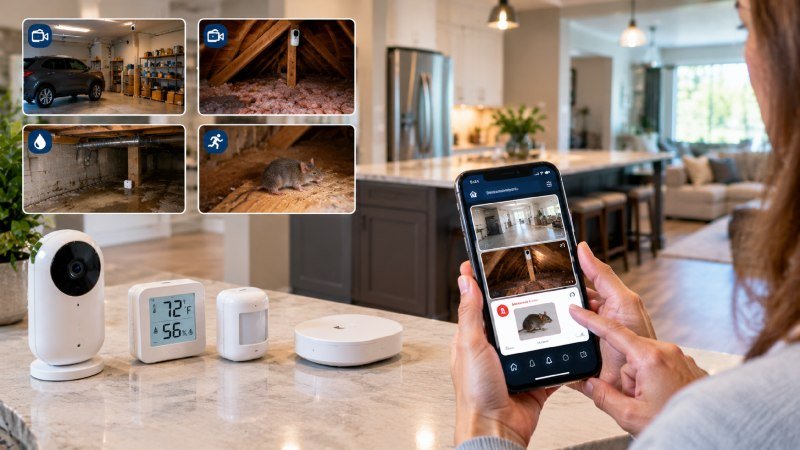
Pests are creatures of habit. Rodents use the same paths night after night, cockroaches emerge at predictable hours, and moisture problems that attract insects tend to repeat when conditions return. Homeowners, however, are usually asleep or away when this activity happens, which makes patterns hard to see. A scratching noise heard once at midnight tells very little.
Connected devices can fill the gap. Cameras, motion sensors, moisture monitors, smart traps, and phone alerts record what happens when nobody is watching, and over time they reveal when and where activity occurs. The sections below explain what these tools can show, how to use them to spot patterns, why they work best alongside physical inspection, and when the data calls for professional help.
What Monitoring Devices Can Reveal
Cameras and motion sensors capture movement in places that are rarely visited: garages, attics, crawl spaces, storage rooms, and outdoor areas along fences and walls. A camera aimed at a corner of the garage might show a rodent passing at 2 a.m. on several nights. A sensor on a storage-room door might show that something is moving items after dark.
Moisture monitors and leak sensors measure the conditions that attract insects and wood-damaging pests. Sensors under sinks, near water heaters, in crawl spaces, and beside air conditioning units detect leaks and damp conditions. A reading that repeatedly spikes at the same location suggests a slow leak or condensation that needs repair.
Humidity and temperature monitors show how conditions change through the day and across seasons. Attics and crawl spaces that stay humid, or that heat up in summer, may support particular pests. A record of readings can show whether ventilation improvements make a difference.
Smart traps combine a trap with a sensor that sends an alert when triggered. They reduce the need to check traps daily and show exactly when a catch occurred. Over time, the timing of alerts reveals activity patterns.
Connected alerts tie these devices together. Notifications on a phone, with time stamps, create a record. The most useful setups use clear thresholds and sensible placement, so that alerts are meaningful instead of constant.
Finding Patterns in Time and Place
Patterns matter more than single events. One alert from a motion sensor might be a moth or a gust of wind. Repeated alerts between midnight and 4 a.m. along the same wall suggest an animal following a regular route. Looking at several days or weeks of data separates the occasional from the habitual.
Time of night offers clues. Rodents are mostly nocturnal and often active in the first hours after dark and again before dawn. Cockroaches also forage at night. Activity during the day may mean that a population is large or that hiding places are disturbed. Wasps and ants are active during warm daytime hours, so alerts at those times point in a different direction.
Location tells where to look. Motion near a particular gap, vent, or door suggests an entry point. Movement along walls and edges follows typical rodent travel. A cluster of moisture alerts in one crawl-space corner suggests a plumbing issue or poor drainage.
Seasonal changes also appear in the data. Moisture alerts may rise after the first heavy rain of the season, and rodent activity may increase when temperatures fall. Keeping a record across seasons helps homeowners anticipate and prepare for recurring pressure.
A short log makes the data useful. Note the date, device, location, what was found when the area was checked, and what was done. Patterns that were hard to see become clear after a few weeks of entries.
Pairing Technology With Physical Evidence and Inspection
Devices have limits. Cameras can mistake insects close to the lens for larger animals, motion sensors can be set off by pets or air movement, and moisture sensors detect water but not its cause. None of them identifies pests with certainty, so the data should be treated as a prompt to look, not as proof.
Physical evidence confirms what the devices suggest. After repeated nighttime alerts, inspect the area for droppings, gnaw marks, grease marks along walls, nests, and shed skins. When a moisture monitor flags a crawl space, check for leaks, damp wood, mud tubes, and signs of insects. Photographs of what is found add to the record.
Regular inspection remains essential. Walk through garages, attics, crawl spaces, and the outside of the house on a schedule, using a flashlight and noting changes. Devices cover the hours when nobody is present, and inspections cover the details that sensors miss.
Practical tips for getting started:
- Place cameras and sensors where activity is likely, such as along walls, near entry points, and close to food or water sources
- Use clear settings and thresholds so that alerts are helpful and not overwhelming
- Check battery life, signal strength, and placement from time to time
- Keep a log of alerts, findings, and repairs
- Combine data with weekly or monthly inspections
- Use the information to guide repairs, such as sealing gaps and fixing leaks
Acting on What the Data Shows
When patterns appear, act on them. If cameras show rodents entering a garage at a particular corner, inspect the exterior in that area and seal gaps with durable materials. If moisture sensors show recurring damp conditions, repair leaks, improve ventilation, and adjust irrigation or drainage. If smart traps catch regularly, look for the source and entry point, since catches alone do not solve the problem.
Check whether changes work. After repairs, watch the data. Fewer alerts and drier readings indicate improvement. If activity continues or moves to another spot, the problem may be larger than it first appeared, or entry points may remain.
Keep expectations realistic. Technology does not remove pests. It helps find them earlier and shows where to focus effort. A homeowner who sees patterns and responds quickly is likely to prevent larger problems.
Share the information with a professional if needed. Dates, times, locations, photographs, and logs make an inspection more efficient and help a technician understand what has been happening.
If alerts keep arriving after repairs, a pest control company in Stockton can identify what is causing them. A pest control company in Stockton can also tell whether a smart trap is catching a species that points to a larger population nearby.
When Monitoring Points to a Need for Professional Help
Sometimes the data shows more than a homeowner can handle alone. Repeated nighttime movement in an attic despite sealing, persistent moisture with no obvious source, or smart trap alerts that continue week after week suggest an established population or a hidden problem. At that point, identification and treatment are best left to experts.
A professional can review the monitoring data, inspect the property, identify the species, find entry points and nests, and recommend treatment and exclusion. Having a record of patterns saves time and helps target the work. The professional can also advise on safe use of traps and baits in homes with children and pets.
Ask what the plan covers and how progress will be measured. Discuss follow-up visits, repairs that the homeowner should make, and how monitoring devices can help check results. Combining professional expertise with the data that devices provide gives the clearest picture of whether treatment has worked.
After treatment, keep monitoring. Continued data collection provides early warning if activity returns, and routine inspection ensures that repairs hold.
Final Analysis
Cameras, motion sensors, moisture monitors, smart traps, and connected alerts help homeowners see when and where pest activity occurs, especially in spaces that are rarely visited. Their strength lies in showing patterns, such as repeated nighttime movement or moisture changes, over time.
Technology works best when combined with physical evidence and regular inspection. When monitoring reveals recurring activity that needs identification or treatment, professional help turns the information into a lasting solution.
Data is most valuable when it leads to action. Homeowners who watch for patterns, confirm them with a flashlight, and repair what they find stay a step ahead of most pest problems.