
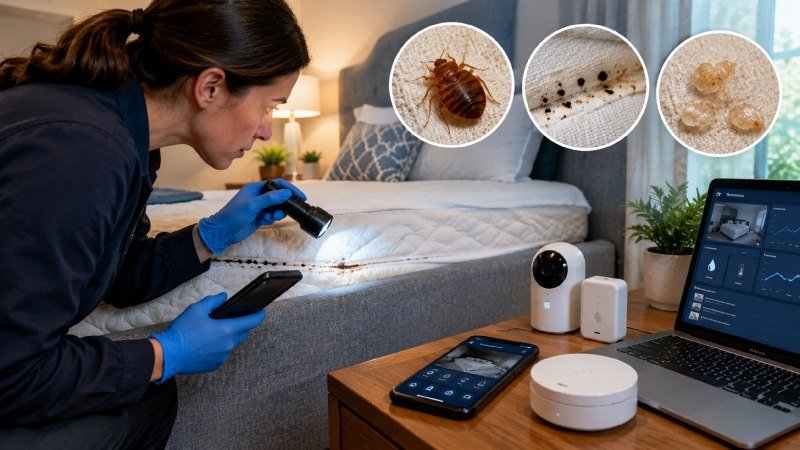
A single reddish stain on a pillowcase can send a household into a week of worry. Bed bugs are flat, roughly the size of an apple seed, and skilled at hiding in mattress seams, headboard joints, and the gaps behind outlet covers. They feed at night and retreat before sunrise, so most people never see one in the act. Technology cannot replace a trained inspector. Still, phones, calendars, and smart home devices can turn scattered impressions into a clear record. The sections below explain how to build that record, what sensors can and cannot show, and how good documentation helps in apartment buildings and during professional visits.
Why Bed Bugs Slip Past Early Detection
Bed bugs avoid light and stay close to where people sleep, usually within a few feet of the bed. They fit into cracks about as thin as a credit card. In the early weeks, a small population may leave only faint signs: tiny dark specks of dried excrement along a mattress seam, pale shed skins, or one itchy bite.
Skin reactions complicate matters. Some people develop welts within a day, while others show nothing at all, so bite marks alone prove very little. Mosquitoes, fleas, and dry winter air can produce similar irritation. The insects themselves usually arrive as hitchhikers in luggage, secondhand furniture, or the belongings of a visitor. A suitcase set on a hotel bed in one city can carry a stowaway into a bedroom hundreds of miles away. Because the evidence is so easy to overlook, a habit of recording small observations matters more than any single gadget.
Building a Dated Log an Inspector Can Actually Use
After local coverage of bed bug outbreaks Michigan neighborhoods have experienced, many residents start worrying about every bite. A written timeline replaces guesswork with facts. Notes apps, shared calendars, and phone photos work well, because every entry carries an automatic date and time.
Take a close-up photo the moment you find a suspicious insect or cast skin, and place a coin or ruler beside it for scale. Save the image in one dedicated folder instead of letting it drift through a camera roll. A short list of entries keeps the log consistent:
- Date, time, and room of every sighting or new bite
- Travel dates, hotel stays, and where luggage was stored afterward
- Dates of guest visits or secondhand furniture arrivals
- Any pest inspections or treatments done by building management
Patterns tend to emerge within a few weeks. Several sightings clustered around one bed point to a localized problem, while scattered entries across many rooms suggest a different cause or a longer-standing infestation.
What Sensors and Cameras Can and Cannot Show
Smart thermostats and humidity sensors track conditions, not insects. Their value is indirect. A log showing a sudden drop in indoor humidity or a dusty HVAC filter can explain skin dryness that was wrongly blamed on bites, which helps rule out other causes.
Cameras offer a little more. Many models record in infrared at night, and a unit aimed at a baseboard, a piece of dark upholstery, or a luggage rack may occasionally capture movement. Realistically, bed bugs are small and move in short bursts, so most footage will show nothing. Treat a clear clip as a lead, never a verdict. Technicians find it useful when the video suggests where insects travel between a hiding place and a bed.
Motion sensors and door alerts can serve a different purpose, since they document visitors, contractors, and delivery of used items. That timeline sometimes explains how an infestation began, which matters when several households share a building.
Shared Walls, Shared Risk, and Clear Reporting
Apartments and condominiums change the picture. In bed bug outbreaks michigan apartment complexes have dealt with, the insects commonly travel through wall voids, electrical conduits, and plumbing chases, so a problem in one unit rarely stays there. Units above, below, and beside the affected one all deserve inspection.
Tenants help most by reporting early and in writing. Email creates a dated record, and attached photos spare everyone from arguing about whether anything was seen. Include the room, the date, and a short description, and keep copies of every reply. Property managers can then schedule a pest control inspection for neighboring units without waiting for further complaints.
Cooperation matters during treatment too. Inspectors and exterminators often need access to every adjacent apartment, and one unreported unit can reintroduce the insects to the rest of the building. Residents who share their logs and follow preparation instructions give a building its best chance at a single, complete treatment.
Confirming the Culprit With a Professional Inspection
Plenty of harmless insects get mistaken for bed bugs. Carpet beetle larvae, booklice, and spider beetles all turn up in bedrooms and closets, and each has fooled careful homeowners. A phone app or automated detector cannot reliably tell them apart, and a wrong guess leads either to needless alarm or to ignored infestations.
A licensed inspector confirms the species by examining mattress seams, bed frame joints, headboard mounts, outlet plates, and carpet edges. A well-kept log lets the inspector begin in the most likely spots instead of searching the whole house at random. That focus shortens the visit, and it helps the treatment plan target the places where insects are actually living.
Bring the photos on your phone, along with the travel and furniture notes. If you collected a specimen, seal it in a clear container or tape it to a card, since a physical sample is often the fastest route to a confirmed identification.
Key Takeaways
Digital records support pest control but never replace it. A dated log, clear photos, and a record of travel and visitors give inspectors something concrete to work from. Sensors and cameras help rule out other causes and occasionally capture a lead, though neither can confirm bed bugs on its own. In multi-unit housing, prompt written reports protect the neighbors as well as the reporting tenant. Regular checks of mattress seams and luggage after trips keep small problems small. When signs appear, a professional inspection is the step that turns suspicion into a reliable answer.