
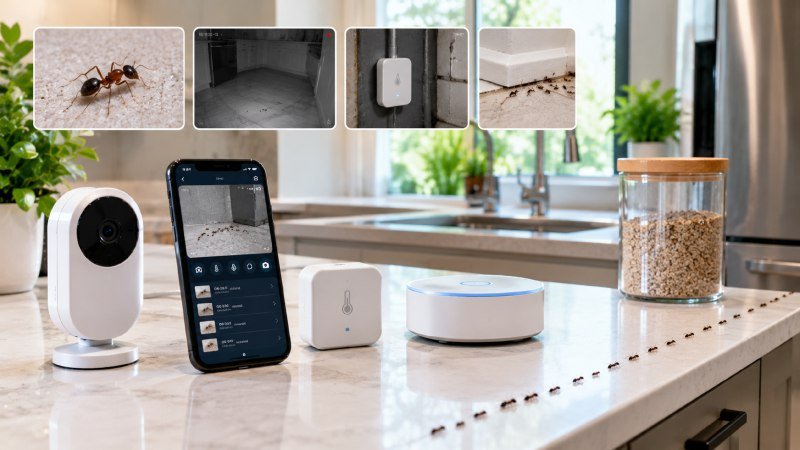
Most people meet an ant problem at the worst possible moment: a line of tiny bodies marching across the counter while the coffee brews. A quick wipe clears the line, the kitchen looks fine by noon, and the trail returns the next morning as if nothing happened. The frustration comes from a simple gap in information. Ants travel when nobody is watching, follow paths that often run inside walls or behind appliances, and vanish from view the moment a light switches on. Homeowners end up reacting to whatever is visible instead of finding where the trail begins. A few inexpensive tools and some steady note-taking can close that gap. The sections below explain why ant trails are hard to read, how simple technology helps, how to keep useful records, and how to turn what you learn into prevention that targets the real source.
Why Ant Trails Are Hard to Read
Ants communicate with scent. A forager that finds food lays a chemical trail on the way back to the nest, and nestmates follow it in a tidy line. The behavior is efficient for the colony and frustrating for a household, because the trail can stretch from a crack in the foundation, through a wall void, past a plumbing line, and out at a baseboard. You may see only the last twelve inches.
Timing adds to the confusion. Many household ants are most active at night or in the quiet early morning, when kitchens and bathrooms are empty. By the time you notice, the traffic has thinned, and cleaning removes the visible evidence. The next sighting looks like a new problem even when it is the same trail.
Memory is another weak point. People remember the dramatic day the ants appeared, but they rarely recall whether the previous sighting happened before or after a rainstorm, a grocery delivery, or a leaking sink. Patterns that would point to a cause stay invisible without a record. Treating each sighting as an isolated event leads to repeated cleaning in the wrong places. Collecting a small amount of data turns scattered annoyances into a pattern you can follow, and a pattern tells you where to act.
Using Simple Technology to Watch Quiet Corners
Inexpensive cameras provide the most direct view. A small motion-activated camera, such as a battery-powered indoor model, can be pointed at a low-traffic area where ants tend to appear: the pantry floor, the space beside the dishwasher, the baseboard under a window, or the cabinet under the kitchen sink. Triggered clips or time-lapse photos show when trails form, how long they last, and which direction the ants travel. Ants are small, so place the camera close, use good lighting or an infrared-capable model, and aim along the baseboard rather than at the whole room.
Keep privacy in mind. Use cameras in utility and storage spaces, not in bedrooms or bathrooms, and turn off audio if the device records it. Many people reuse an old phone on a stand with a time-lapse app, which costs nothing.
Moisture sensors add a second layer. Small Wi-Fi water leak detectors cost little and can sit under sinks, beside water heaters, behind toilets, or under the refrigerator’s water line. Ants seek moisture as much as food, especially during dry spells, so a slow leak can explain why they keep returning to the same spot. A simple humidity monitor in a bathroom or laundry area serves a similar purpose. When a sensor alert coincides with a new ant trail, the connection is hard to ignore. None of these tools kills a single ant. Their value lies in showing where to look and when.
Observation Habits: Notes, Photos, and a Timeline
Technology works best alongside a habit of recording what you see. A shared note on your phone or a basic spreadsheet is enough. Each time you spot ants, record the date, time, room, exact location, approximate number, and any conditions that stand out, such as rain overnight, a spilled drink, or a fresh bag of groceries. Add a photo with a coin or ruler for scale. Photos help you identify the species later and show whether the ants are tiny and pale, dark and slow, or large and glossy, which matters when you discuss the problem with a professional.
Trace the trail whenever you can. Follow the line in the direction the ants are heading until it disappears into a gap, and mark that spot with a small piece of painter’s tape. Mark where the trail first appears too. The first sighting often shows a different location from the main activity, and the tape gives you a physical map.
After a few weeks, review the log. Look for repeats. Do sightings cluster near a particular wall, after dishwasher cycles, or on rainy days? Does activity stop after a deep clean and resume when the trash goes out? Patterns of this kind reveal the colony’s logic. A timeline also helps you judge whether your actions work. If activity drops for two weeks after a leak repair and sealing, you have learned something real. If it does not change, you know the source lies elsewhere.
Turning Patterns Into Targeted Prevention
Once a pattern emerges, you can match each action to the specific problem you have identified instead of trying everything at once. Resources such as 7 quick tips to prevent ants from taking over your home outline general steps, and your own data tells you which ones deserve priority in your house.
If cameras show trails heading to the pet bowl, adjust feeding: pick up bowls after meals, wipe the area, and store food in sealed containers. If sensors flagged moisture beneath a sink, repair the leak, dry the cabinet, and check supply lines. If trails enter along a window frame, seal the gap with caulk and clean the sill to remove the scent trail. If activity centers on the pantry, move dry goods into airtight containers and wipe shelves. Cleaning a trail with soapy water or a vinegar solution removes the scent that guides nestmates, and it works best when paired with fixing the underlying cause.
Reading general advice such as 7 quick tips to prevent ants from taking over your home becomes more useful once you know where the ants come from. A tip about sealing entry points means little if you cannot find the entry point, and a tip about food storage means little if the real draw is a damp cabinet. Your records let you choose confidently. Be cautious with sprays, since repellent products can scatter some colonies and spread the problem to new areas. Slow-acting baits used according to the label are a common approach, though stubborn or large infestations often need a professional evaluation.
Building a Routine That Lasts
Prevention succeeds through repetition. A modest weekly routine keeps problems small:
- Check the log and any camera clips or sensor alerts for new activity
- Wipe counters, sweep floors, and take out trash and recycling before they overflow
- Look under sinks and around appliances for drips, dampness, or condensation
- Inspect window frames, door thresholds, and utility entries for gaps
- Refresh bait stations or traps if you use them, following the instructions
Seasonal tasks add structure. Before the rainy season, trim shrubs and branches that touch the house, clear gutters, and check caulking. During warm months, store pet food and bird seed carefully, and inspect outdoor dining areas. After big weather changes, review your notes, since ants often move indoors when conditions outside turn too wet or too dry.
Know when to ask for help. If ants keep appearing after you have removed food sources, repaired leaks, and sealed visible gaps, the colony may sit inside a wall or beneath a slab. Carpenter ants, which excavate damp wood, are a more serious concern, and signs such as sawdust-like debris deserve prompt attention. Share your log and photos with a licensed technician, since they shorten diagnosis considerably.
End Note
Ant control improves when guesswork gives way to evidence. Motion-activated cameras, moisture sensors, photos, and a simple written log reveal where trails start, when they appear, and what conditions seem to trigger them. That information makes cleaning, food storage, leak repair, and sealing far more precise.
You do not need expensive gear or a complicated system to benefit. A phone, a notebook, a few inexpensive sensors, and consistent attention are enough to turn scattered sightings into a clear picture. With that picture, each action targets a real cause, and the problem is far less likely to return.