
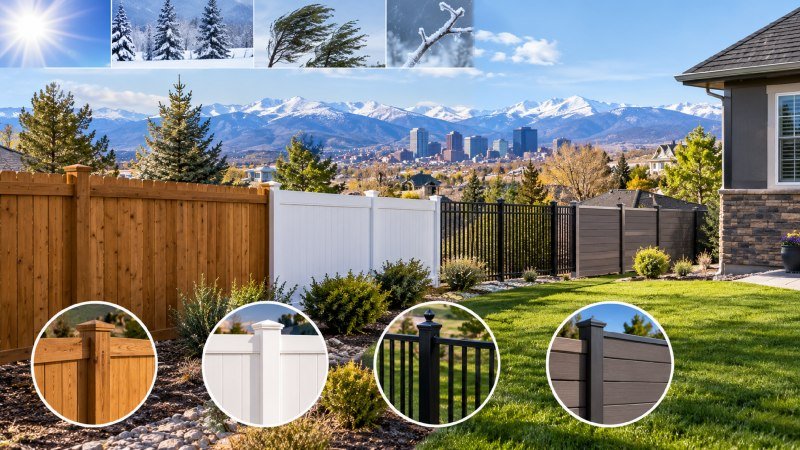
Why Front Range Weather Matters
A fence in Denver, Aurora, Lakewood, Centennial, Littleton, Arvada, or Thornton needs to do more than define a yard or business property. It must handle changing conditions throughout the year, including intense sunlight, snow accumulation, occasional high winds, dry air, and soil movement during freeze-thaw cycles. Homeowners can consult EverFence of Denver when evaluating fencing options suited to their property’s needs and local conditions. The best choice depends on the site, intended use, and applicable local requirements.
Weather patterns can vary across the metro area, especially where a property is exposed to open space, foothills corridors, or broad east-west streets. The National Weather Service maintains Denver-area climate records that illustrate why planning for varied conditions is more practical than designing around one average season. A fence that appears stable during a dry late summer may reveal loose posts, stressed rails, or gate problems after winter moisture and spring thaw.
Comparing Common Fence Materials
No single material is ideal for every Front Range property. The right choice balances appearance, privacy, maintenance expectations, wind exposure, budget, and the strength of the supporting structure.
Wood
Wood remains a familiar choice for privacy fencing because it can be built in many styles, repaired board by board, and finished with paint or stain. It does require regular attention. Sun can dry the surface, and moisture trapped near the ground can contribute to deterioration over time. Ground-contact-rated components and a finish appropriate for exterior exposure can help extend service life.
Vinyl
Vinyl fencing is often chosen for its smooth appearance and relatively simple maintenance. It does not need staining, but it still depends on well-supported posts and rails. A tall solid vinyl fence can catch substantial wind, while sharp impacts or heavy pressure may damage individual sections. Buyers should consider the full system, not only the panel appearance.
Aluminum
Aluminum fencing works well where visibility matters, such as around landscaped front yards, sloped lots, pools, or commercial boundaries. Its open design allows wind to pass through more readily than a solid privacy wall. It generally offers less screening, however, so it may need to be paired with landscaping when privacy is important.
Composite
Composite fencing can provide a more uniform, low-maintenance appearance than wood while offering stronger privacy than open metal styles. Like vinyl, it should be evaluated as a complete engineered assembly. Properly spaced posts, compatible rails, and hardware suited to the manufacturer’s system are important, particularly for long runs and wind-exposed yards.
Planning for Wind and Snow
Wind load is a central consideration for tall, solid fences. A privacy fence acts more like a broad surface than an open picket or ornamental panel, placing force on posts, rails, fasteners, and gates. The risk can be greater at exposed corners, along open fields, near trail corridors, or on properties with little shelter from buildings and mature vegetation.
Snow deserves attention as well. Drifts can collect along fence lines, against lower boards, and around gates. Snow piled by shoveling or plowing can prevent a gate from opening and add pressure to a weak section. Before finalizing a layout, identify likely drift areas, roof runoff locations, driveway snow storage zones, and the direction in which gates need to swing.
- Walk the proposed fence line during different times of day to note wind exposure, shade, standing water, and slope.
- Mark areas where snow is likely to be piled or drifted against the fence.
- Choose an appropriate fence height and openness level for the location.
- Ask how posts will be set, braced, and protected from moisture at ground level.
- Leave practical access for future cleaning, repairs, and gate adjustments.
Sun, Drainage, and Freeze-Thaw Cycles
Denver’s elevation and clear, sunny weather can be demanding on exterior finishes. Wood may fade, dry out, split, or check without periodic care, while darker surfaces can become noticeably hot in direct sunlight. UV-resistant finishes and materials designed for outdoor exposure can help, but no surface treatment compensates for inadequate post depth, poor drainage, or weak connections.
Water management matters around every post. When water collects in a post hole or along the base of a fence, it can contribute to soil movement and material deterioration. Sloping soil away from posts where feasible, avoiding blocked drainage paths, and keeping sprinklers from repeatedly soaking the fence line are sensible long-term steps.
Local Rules and Property Lines
Fence regulations differ among Front Range cities and can also vary by zoning district, corner-lot location, height, transparency, and proximity to sidewalks or streets. For example, Arvada’s fence permit guidance addresses permits, site plans, sight-distance concerns, HOA requirements, and additional review for some taller fences. Rules in Aurora, Lakewood, Centennial, Littleton, Thornton, and Denver should be checked directly with the relevant local authority before ordering materials.
Confirm the property line before construction begins. Existing fences, landscaping edges, and informal neighbor agreements do not necessarily establish a legal boundary. It is also important to arrange utility locating before digging, review HOA standards where applicable, and consider drainage, easements, alley access, and visibility at driveways or intersections.
Privacy, Visibility, and Security
A solid wood, vinyl, or composite fence can provide privacy and create a sheltered outdoor space, but it also offers more surface area for wind to catch. Spaced pickets and aluminum panels offer greater visibility and airflow. For businesses, open fencing can improve sightlines around parking areas, entry points, and loading zones, while a more substantial design may be appropriate where screening or controlled access is the main goal.
Gates should be treated as part of the fence system. Consider gate width, latch placement, hinge strength, snow clearance, pedestrian access, pet containment, and whether seasonal ground movement could affect alignment. A well-built fence can still become inconvenient if its gates drag, bind, or lack enough clearance.
Installation Details That Matter
- Set posts to a depth suitable for the fence height, soil conditions, and local construction requirements.
- Use corrosion-resistant hardware appropriate for exterior use.
- Choose ground-contact-rated wood where wood will be near soil or routinely exposed to moisture.
- Account for slopes with stepped or racked sections rather than forcing panels out of alignment.
- Keep irrigation lines, drainage channels, and utility routes in mind during layout.
- Inspect posts, rails, panels, and gates after installation, before small alignment issues become larger repairs.
Seasonal Maintenance
A brief inspection schedule can help preserve any fence material. In spring, look for leaning posts, loose hardware, frost movement, and damaged boards or panels. During summer, wash away dirt and inspect finishes for fading, cracking, or water absorption. In fall, clear leaves and debris from the fence base and test gate operation. After major storms, check for shifted posts, bent metal, loose rails, or sections under unusual pressure.
Final Planning Checklist
- Define the main purpose: privacy, pets, appearance, safety, screening, or security.
- Review wind, snow, sunlight, slope, drainage, and gate access along the entire fence line.
- Compare wood, vinyl, aluminum, and composite based on maintenance and site conditions, not appearance alone.
- Verify municipal rules, HOA standards, utilities, easements, and property boundaries.
- Ask detailed questions about posts, footings, rails, fasteners, and gate hardware.
- Plan for inspections and maintenance before the first winter season arrives.
The most durable Denver-area fence is usually the one that matches its material, structure, and layout to the property’s realities. Careful planning for Front Range sun, snow, wind, drainage, and daily use can help homeowners and businesses create a boundary that looks appropriate and performs reliably over time.