
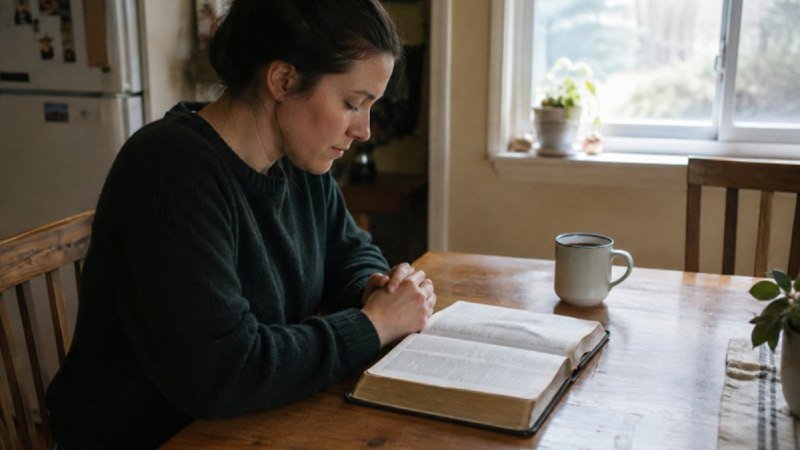
Prayer can be a meaningful way to care for the heart and mind during demanding seasons. It gives people space to bring their concerns honestly before God, reflect on His truth, and seek wisdom for the next step. Simple practices for preparing your heart for prayer can help make this time less distracted and more grounded in humility, Scripture, and trust.
Prayer is not a substitute for medical care, counseling, or crisis support when those are needed. Christians do not have to choose between seeking God in prayer and receiving appropriate help. Both can be part of a wise, faithful response to emotional strain, anxiety, grief, and other mental health concerns.
Table of Contents
- Why Prayer and Well-Being Often Overlap
- What Research Can and Cannot Say
- How to Build a Healthy Prayer Routine
- Using Prayer During Stressful Moments
- The Role of Community and Shared Prayer
- When Prayer Is Not Enough
- Common Mistakes to Avoid
- A Simple Seven-Day Plan
Why Prayer and Well-Being Often Overlap
Prayer gives believers a deliberate pause amid ordinary responsibilities. Rather than allowing every concern to direct the day, a person can name what is troubling them, ask God for help, and consider a wise response. This does not guarantee immediate relief, but it can encourage steadiness when circumstances remain difficult.
Prayer may include praise, thanksgiving, confession, lament, intercession, and requests for wisdom. The Psalms model honest speech before God, including joy, fear, sorrow, and hope. This kind of honesty can be especially valuable when a person is tempted to minimize painful emotions or carry them alone.
What Research Can and Cannot Say
Research on spirituality and mental well-being continues to explore how religious practices, personal beliefs, relationships, and coping habits interact. Findings can vary because people pray in different settings, bring different expectations, and face different challenges. Prayer may support coping and meaning for some people, but it is not a clinical treatment or a guarantee that distress will disappear.
Good mental health care also includes practical attention to sleep, relationships, physical activity, daily responsibilities, and stress management. The daily practices that support mental health, as described by the National Institute of Mental Health, can complement prayer without competing with it.
Questions to Keep in Mind
- Does this prayer practice help me become more honest, patient, and attentive?
- Am I asking prayer to carry a burden that should also be shared with a trusted person?
- Do I need practical help, a difficult conversation, or professional care alongside prayer?
- Is this routine drawing me toward grace and wisdom, or becoming another burden?
How to Build a Healthy Prayer Routine
A helpful routine does not need to be lengthy or impressive. Begin with a small, realistic commitment and allow it to grow over time. Five focused minutes each day may be more sustainable than a plan that creates pressure and quickly fades.
A Practical Four-Step Routine
- Choose a steady time. Pray after waking, during a quiet break, or before bed.
- Reduce distractions. Put the phone aside and select a calm, ordinary place.
- Name the moment. Tell God plainly what you are feeling, fearing, or thanking Him for.
- Identify one next step. Consider whether the next wise action is to rest, read Scripture, offer an apology, have a conversation, or reach out for help.
Using Prayer During Stressful Moments
Prayer can be especially useful when stress makes it difficult to think clearly. Its purpose is not to deny fear or force a certain emotion. Instead, it can create a brief pause before reacting, helping a person respond with greater care.
A Short Pause Plan
- Stop and place both feet firmly on the floor.
- Take several slow breaths.
- Name the concern in simple language.
- Offer a brief prayer for wisdom, peace, endurance, or help.
- Take the next responsible action available.
This may be useful before a difficult meeting, during family tension, after troubling news, or while waiting for an important appointment. Prayer should accompany faithful action. It should not be used to avoid needed communication, boundaries, treatment, or responsibility.
The Role of Community and Shared Prayer
God often provides encouragement through other people. A trusted church community, family member, or mature friend can listen, pray, and offer practical support. Shared prayer is healthiest when it respects privacy and avoids quick answers to deep pain.
- Listen carefully before giving advice.
- Keep personal information private.
- Check in after a hard week or significant loss.
- Offer practical help with meals, transportation, childcare, or errands.
- Encourage qualified care when a struggle continues or worsens.
No one should feel compelled to disclose private details, pray aloud, stop prescribed treatment, or appear cheerful when they are struggling. Grace makes room for truthfulness.
When Prayer Is Not Enough
Prayer is meaningful, but it cannot diagnose a mental health condition or replace professional assessment and treatment. Consider speaking with a qualified health professional when distress is severe, lasts for two weeks or more, or interferes with sleep, work, relationships, or basic daily tasks.
Seek prompt support for persistent hopelessness, panic, major changes in appetite or energy, difficulty concentrating, or an inability to complete ordinary responsibilities. If you or someone else is in immediate danger, call emergency services. In the United States, people experiencing suicidal thoughts or emotional crisis can call or text 988 for confidential crisis support at any time.
Common Mistakes to Avoid
- Turning prayer into a performance: God is not asking for polished language.
- Expecting instant answers: Faithful prayer can coexist with unanswered questions and ongoing hardship.
- Ignoring emotional pain: Honest lament is different from pretending everything is fine.
- Avoiding practical action: Wisdom may require a call, an appointment, a boundary, or a conversation.
- Creating an unrealistic schedule: A modest routine is better than a perfect plan that cannot last.
A Simple Seven-Day Plan
- Day One: Write down one concern and one reason for gratitude.
- Day Two: Spend five quiet minutes praying without a device nearby.
- Day Three: Reflect on one Scripture passage about God’s faithfulness.
- Day Four: Pray for strength before completing one difficult task.
- Day Five: Share a concern with a trusted person.
- Day Six: Notice what has affected your mood, focus, and rest.
- Day Seven: Keep what was helpful, adjust what was not, and decide whether additional support is needed.
Final Thoughts
Prayer can support mental well-being by making room for truth, grace, gratitude, and wise reflection. It can help believers remember that they are not alone and that God welcomes them in weakness. A healthy practice of prayer does not demand perfection. It encourages faithful discipleship while also making room for supportive relationships, sound judgment, and professional care when needed.