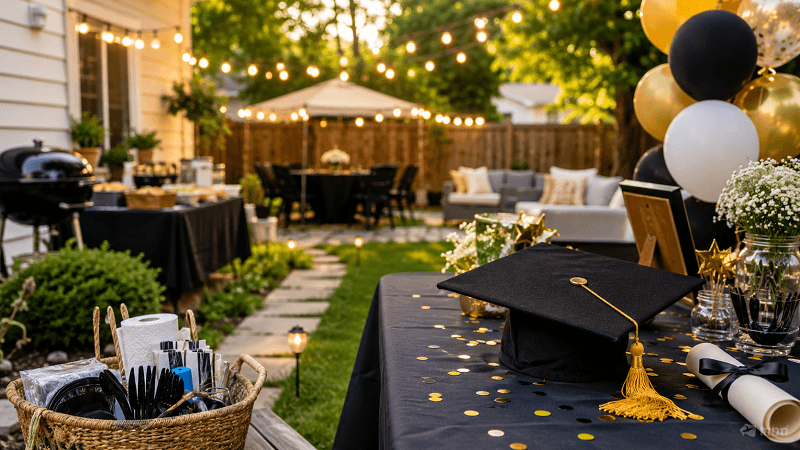
Graduation season is here, and if your family is hosting a backyard celebration this May, there is a lot more to think about than just ordering a cake. Between the food tables, the seating, the string lights, and making sure your outdoor patio does not embarrass you in front of twenty guests, small details really add up. Most people scramble the night before trying to move furniture, wipe down surfaces, and figure out where everyone is going to stand. This guide covers the backyard party planning tips that most families miss until it is too late, including patio cleaning, outdoor seating layout, food station setup, and surface prep like paver sealing for backyard patios to protect against spills.
Key Takeaways
- Plan your layout by measuring your space first, before setting a guest count
- Arrange seating in clusters of four to six, not in rows or lines against walls
- Place the food table along the side edge of your gathering area to keep foot traffic moving
- Test all outdoor lighting at least two nights before the party
- Clean, scrub, and inspect all patio surfaces at least three days in advance
- Sealed pavers resist food and drink stains much better than unsealed ones
- Keep a backup weather plan ready with a canopy or tent on standby
Start with Your Outdoor Space, Not Your Guest List
Most people build their guest list first and then realize their patio cannot actually hold that many people comfortably. Flip that process around. Before you send a single invitation, go outside and honestly look at your space.
Walk through it the way a guest would. Where do people naturally drift when they first arrive? Where does foot traffic bunch up? Is there a clear path between the seating area and where food will be? These questions seem simple, but most hosts skip them entirely until day-of when everything feels cramped.
A standard outdoor dining chair takes up about 3 to 4 square feet of space. Add 18 inches of clearance per side for people to move around, and you quickly realize that a 12-by-14-foot patio can realistically hold about 12 to 16 guests comfortably before it starts feeling tight. For larger groups, you need to expand your layout into the yard, not just pile more chairs onto the patio.
How to Set Up Seating That Actually Works
The biggest mistake at backyard parties is lining chairs up against the walls or fences like a waiting room. That layout forces people to either shout across a distance or sit in awkward silence next to strangers. Instead, arrange seating in small clusters of four to six chairs with a small table or cooler between them. This naturally creates conversation groups and feels much more relaxed.
A few things to think about when arranging seating:
Create a clear flow path. There should always be at least a 3-foot walkway between seating clusters so people with plates and drinks can move without squeezing past everyone.
Put shaded spots near the back. In Florida and other warm states, May afternoons can get hot fast. Position chairs with an umbrella or canopy toward the back so guests have a cool option without blocking the main gathering area.
Keep the graduate’s seat visible. If you are doing a speech, toast, or slide show, make sure people can see the graduate from wherever they are sitting. A slight semicircle or angled cluster setup works much better than rows for this.
Separate the kids’ area. If children will be at the party, set up a small table specifically for them a bit away from the main group. Kids move around more and can knock things over near adults with drinks.
Food Table Placement: Where Most Hosts Go Wrong
Food tables cause more traffic problems at backyard parties than any other element. The instinct is to put the food in the center so everyone can reach it, but that usually creates a bottleneck that blocks all movement for the first hour of the party.
Here is what works better: put the food table along one side edge of your patio or yard, with open space on at least two sides. This lets people approach from multiple angles and keeps the main gathering area open.
A good setup for a graduation party of 20 to 40 people:
| Station | Placement | Why It Works |
| Drinks | Near the entrance | First stop, keeps crowd moving |
| Appetizers and snacks | Separate from main food | Reduces waiting at food table |
| Main food | Side edge of patio | Opens flow in the center |
| Cake and desserts | Revealed later | Builds excitement, keeps table clear |
One thing people rarely think about: keep hot food away from where people are sitting for extended periods. The smell is fine at first but becomes overwhelming by the second hour. Position hot dishes toward the outside of the setup so steam and odors disperse more easily.
Outdoor Lighting: Get This Right Before the Day
If your graduation party runs into the evening, lighting is one of the most overlooked details. Bad lighting makes a backyard feel dark and unwelcoming. Good lighting makes the exact same space feel like a real event.
The best approach for a graduation party is a mix of two or three types:
String lights hung above the main gathering area create a warm, overhead glow that covers a large area without any one light being too harsh. Solar-powered string lights have gotten much better in recent years and charge themselves during the day.
Pathway lighting along the edges of your patio and walkways helps guests navigate after dark without tripping. Small solar stake lights work well and take minutes to install.
Accent lighting near the food table keeps food visible and appetizing. A couple of outdoor-rated LED lanterns or clip-on lights on the table do the job well.
One planning note: set up and test all your lights at least two nights before the party. You will almost always find a strand with dead bulbs or a solar light that needs more direct sun than your yard provides, and you want time to swap things out.
Surface Prep: The Part Nobody Thinks About Until the Last Minute
Here is the honest truth about backyard patios before a party: if you have not cleaned them since last summer, they are probably not ready. Pollen, mildew, dirt, and staining from last season have built up in ways you stop noticing until you see photos afterward.
A full surface prep before a graduation party includes a few key steps.
Sweep and rinse first. This sounds obvious, but a full sweep followed by a rinse with a garden hose removes the loose debris that makes everything look dirty. Do this two or three days before the party so everything has time to dry.
Scrub stained areas. Patio furniture tends to leave rust rings on concrete. Food and drink stains from previous gatherings can leave marks on pavers that a hose alone will not fix. A stiff-bristle brush with a diluted cleaning solution handles most of these.
Address organic growth. If your patio has any green or black growth in the joints between pavers or along edges, that needs treatment before guests arrive. Algae and mildew are slippery, which is a safety concern when you have guests walking around with food and drinks.
Consider paver sealing before the party. If your outdoor space has brick or concrete pavers, this is the step that most homeowners skip but really should not. Professional paver sealing for backyard patios creates a protective layer on the paver surface that resists staining from spilled drinks, food, and grease. At a graduation party, those spills are not a question of if but when. A sealed surface is much easier to wipe clean, and the sealant also brings out the natural color in the pavers, making them look noticeably cleaner and more finished. Many families in Southwest Florida have their patio pavers professionally sealed in the spring specifically because of graduation and summer gathering season.
The Week-Before Checklist Most Hosts Forget
Beyond the big stuff, there are smaller tasks that pile up fast if you leave them all for the last day. Here is a week-by-week breakdown:
Two weeks before:
- Confirm guest count and order supplies accordingly
- Check outdoor furniture for broken pieces or wobbly legs
- Schedule any professional services (paver cleaning, surface sealing)
- Order or make any decorations
One week before:
- Deep clean the patio surface
- Test all outdoor lighting
- Confirm food orders and delivery times
- Arrange rental of any extra tables or chairs if needed
Two to three days before:
- Set up furniture and do a full walkthrough in the space
- Run a weather check and plan a backup if needed
- Prep any food items that can be made in advance
- Put out trash cans and recycling bins in accessible spots
The day before:
- Set up the food station without the food itself
- Hang lights and decorations
- Charge any battery-powered speakers or lanterns
- Prepare a simple cooler with drinks ready to go
Weather Planning for May Outdoor Parties
May in most parts of the Southeast and Gulf Coast is warm and beautiful, but afternoon thunderstorms are a real possibility. A graduation party that starts at noon can easily see rain by 3 pm in Florida and neighboring states.
The simplest backup plan is a canopy or pop-up tent that covers at least the food table and a portion of the seating. A 10-by-10-foot canopy costs about $60 to $100 at most home supply stores and takes 15 minutes to set up. Having one on hand means a light rain shower does not end your party.
For the graduate and immediate family, designate one dry spot under a covered patio or tent for photos. Even if it rains briefly, you still get the important pictures without everyone being soaked.
Frequently Asked Questions
How early should I start setting up for a backyard graduation party?
For a party of 20 to 40 people, start your outdoor setup at least one full day in advance. The food and perishables go out the morning of, but furniture, lighting, decorations, and table arrangements should be done the day before. This gives you time to notice anything that is missing or broken without last-minute stress.
What is the best way to keep outdoor seating comfortable in May heat?
Shade is the most important factor. Position at least a portion of your seating under a tree, canopy, or umbrella. Offer a fan or two if you have an outdoor outlet nearby. Also, avoid dark-colored furniture in direct sun since metal and plastic chairs absorb heat quickly and become uncomfortable to sit on.
How do I stop bugs from ruining my outdoor party?
Set up citronella candles or small torches around the perimeter of the seating area. Keep food covered until serving time since open food is the main bug attractor. You can also use a battery-powered bug repellent device near the food table. Avoid using strong-smelling sprays directly on guests, as these can be irritating.
Should I seal my patio pavers before a party if they have never been sealed before?
Yes, and ideally you want to do it at least a week before the event so the sealant has time to fully cure. Fresh sealant needs 24 to 48 hours to set and a few more days to reach full hardness. A professional paver sealing service can usually complete a standard backyard patio in one day and will advise you on the right timing before your event.
How much seating should I have for a graduation party of 30 people?
Plan for seating for at least 70 to 80 percent of your guests at any one time. Not everyone sits at once, but you want enough chairs for most people. For 30 guests, that means 20 to 24 chairs across several clusters, plus some casual perch spots like garden walls or bar-height surfaces.
What is the easiest food setup for a backyard graduation party?
A buffet-style layout with one main station and a separate drinks station is the easiest to manage. Keep hot foods in chafing dishes and cold foods on ice. Label every dish clearly since many guests have dietary restrictions. Set up plates, napkins, and utensils at the beginning of the food line so guests can grab everything before they reach the food.
Conclusion:
A graduation party is a real milestone worth celebrating well. The details that make it feel put-together are not expensive or complicated, but they do require a bit of planning ahead. Getting your space ready, your layout thought out, and your surfaces cleaned and protected means you can actually enjoy the day instead of managing logistics while everyone else celebrates. Start early, check the list twice, and let the party take care of itself.