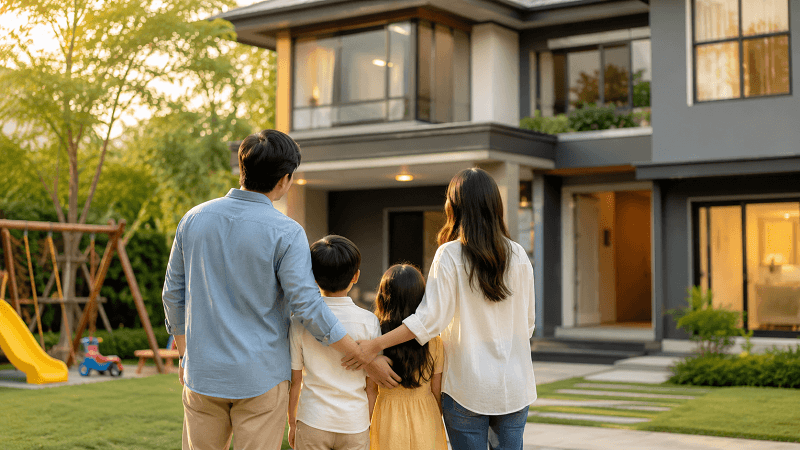
How to find a rental that checks all the boxes for your family and helps you build a life that works for everyone under your roof.
Let’s be honest: apartment hunting is already stressful enough before you add kids to the equation. Once you do, the list of must-haves changes dramatically. Suddenly, you’re moving from thinking about commute times and countertop finishes to thinking like a parent and scanning for sharp corners, busy streets, and whether that second bedroom is big enough to fit a crib and a toddler’s ever-growing collection of stuffed animals.
Whether you’re renting your first apartment as a family or relocating to a new city, the right rental can make daily life feel seamless, yet the wrong one can make it feel like an uphill battle. . Here’s how to find a place that actually works for your family, not against it.
Start With the Neighborhood, Not the Floor Plan
It’s tempting to jump straight to browsing listings and comparing kitchens, but the neighborhood matters far more than most parents realize. A beautiful apartment in a poorly suited area will cause more headaches than a modest one in the perfect location.
Ask yourself these questions before you even start scrolling:
- How close are schools and daycare options? A shorter commute to school means less chaos in the morning, and that’s priceless.
- Are there parks or playgrounds within walking distance? Kids need outdoor time, and having a green space nearby takes the pressure off those long weekend afternoons.
- What’s the traffic situation like? A quiet, residential street is worth its weight in gold when your four-year-old is learning to ride a bike.
- Is the area walkable? Stroller-friendly sidewalks, nearby grocery stores, and accessible public transit can transform your daily routine.
Drive or walk through the neighborhood at different times of day. A street that feels charming on a Tuesday morning might be noisy and congested by Friday evening. Talk to neighbors if you can. Parents in the area are usually more than happy to share the real story.
Think About Layout With Fresh Eyes
Open-concept living spaces look great on social media, but for families with young children, they’re a double-edged sword. Yes, you can keep an eye on the kids while cooking dinner. But there’s also nowhere to hide the toy explosion when guests come over.
Here’s what to look for in a family-friendly layout:
- Bedrooms near each other. For families with babies or toddlers, having bedrooms on the same floor — and ideally close together — makes nighttime wake-ups much easier to handle.
- A functional kitchen. You don’t need a chef’s kitchen, but you do need enough counter space to prep meals and enough cabinet space to store snacks, bottles, and the seventeen sippy cups you somehow own.
- Storage, storage, storage. Closets, a garage, a basement, a mudroom — whatever form it takes, extra storage space is non-negotiable when you’re raising kids. Gear accumulates fast.
- Bathroom count. One bathroom can work for a small family, but if you’re potty training, mornings are going to get competitive. Two bathrooms, even if one is small, can be a game-changer.
Also, think vertically. A multi-story rental might seem spacious, but hauling a sleeping toddler up three flights of stairs at 9 p.m. gets old quickly. If stairs are unavoidable, make sure they can be gated safely.
Safety Should Be a Dealbreaker, Not an Afterthought
Safety matters start very early on. As you’re beginning your search, you should be mindful of what platforms you are using. The frequency of rental scams is concerning, and that’s why a trusted platform such as RentCafe for example, where listings are sourced from property managers, adds a much-needed layer of mental comfort.
After you’ve found a few great (and verified) candidates, when you tour a potential rental, put on your “parent goggles.” Get low — literally — and look at the space from your child’s eye level. Here’s a quick safety checklist:
- Windows: Do they have locks or guards? Are there accessible window sills a toddler could climb?
- Outlets: Are they covered or tamper-resistant?
- Flooring: Hardwood is easy to clean, but area rugs might be needed to cushion falls. Check for loose carpet or uneven flooring that could cause trips.
- Balconies and decks: Are the railings spaced closely enough that a small child can’t squeeze through?
- Lead paint and asbestos: In older buildings, ask the landlord directly. Federal law requires landlords to disclose known lead-based paint hazards in homes built before 1978.
- Smoke and carbon monoxide detectors: Make sure they’re present and functional. This is basic, but it’s worth confirming.
Don’t assume you can “fix” safety issues after moving in. Some landlords are accommodating, but others may not allow modifications. Get clarity before you sign.
Have an Honest Conversation With Your Landlord
Speaking of landlords, the relationship you have with yours matters more when you have kids. Before signing a lease, ask about:
- The pet and noise policy. If the building has strict noise rules, that’s something to consider when you have a toddler who thinks 6 a.m. is the perfect time to practice drumming on the floor.
- Maintenance response times. A broken heater in January is an inconvenience for a single adult. For a family with an infant, it’s an emergency.
- Permission for minor modifications. Can you install baby gates? Anchor furniture to the walls? Add a lock to a cabinet? These small changes can be critical for child safety.
- Lease flexibility. Families’ needs change fast. A two-year lease might feel fine now, but what happens if you need an extra bedroom sooner than expected?
Being upfront about your family situation helps set expectations on both sides. A good landlord will appreciate the transparency.
Don’t Overlook the “Boring” Stuff
It’s easy to get swept up in the charm of a rental and gloss over practical details that affect daily life with kids. Pay attention to:
- Laundry access. In-unit laundry is the gold standard for families. If it’s not available, how far is the nearest shared laundry room or laundromat? With kids, you will be doing laundry constantly.
- Loading and unloading a car with children and groceries is much easier with a dedicated spot close to your door.
- Climate control. Can you control the thermostat? Keeping a consistent temperature matters for naps, bedtime, and general comfort.
- Internet reliability. It might not seem like a parenting issue, but between remote school days, work-from-home schedules, and the occasional lifesaving episode of a favorite show, reliable internet is essential.
Trust Your Gut (and Your Kids)
If possible, bring your children along for a second visit to your top choices. Watch how they respond to the space. Do they run around happily, or do they seem uneasy? Kids pick up on things adults overlook, like the echo in a hallway, the darkness of a room, the feel of a place.
And trust your own instincts, too. If something feels off, it’s okay to keep looking. The right rental is out there.
Final Thought
Renting with kids requires being strategic. It means knowing which compromises are acceptable and which ones aren’t. A slightly smaller kitchen is fine. A busy road with no crosswalk outside the front door is not.
Take your time, ask the hard questions, and remember: you’re choosing the backdrop for your family’s everyday life. Make it a good one.