
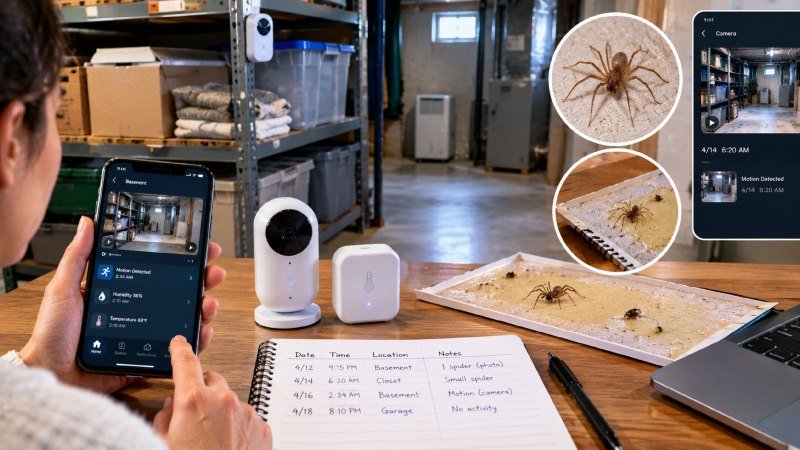
Few spiders cause as much worry as the brown recluse, and few are so often reported without confirmation. A sighting in a closet or a bite-like mark on the skin can set off a search for answers. Technology offers a calmer path. Cameras, digital logs, sticky monitors, and environmental sensors can document when and where suspicious activity occurs, giving you evidence instead of guesswork. The tools cannot name a species on their own, but they can reveal patterns. The sections below explain how to build that record in the quiet corners of a home and how to use it.
Why Low-Traffic Spaces Need Careful Watching
Spiders favor places people rarely disturb. Closets, basements, storage rooms, garages, and the backs of shelves provide shelter, stable temperatures, and a supply of small insects. Cardboard boxes, clothing piles, and undisturbed corners add hiding places.
Because those spaces are visited so seldom, activity can go unrecorded for months. A single spider found on a wall tells you little about how long it has been there or whether others share the area. Monitoring fills that gap. Instead of relying on occasional glances, you can track conditions continuously or at regular intervals. Collecting dates, locations, and observations in one place turns scattered impressions into a timeline, and a timeline makes it far easier to separate a passing visitor from a persistent presence.
Cameras, Sensors, and Digital Logs
Small motion-activated cameras can be placed to cover a basement corner, a closet entrance, or a garage shelf. They work best for capturing larger movement and for confirming that nothing unusual is crossing a space. Small spiders are hard for most cameras to detect, so footage is more useful for observing prey activity, rodents, and human disturbance than for catching a spider itself.
Environmental sensors add context. Humidity and temperature monitors reveal whether a room stays damp or warm, conditions that support insects and the spiders that feed on them. A digital log, such as a notes app or simple spreadsheet, ties everything together. Record the date, location, a short description, and a photograph for each observation. Homeowners tracking a suspected brown recluse in virginia can use this kind of log to show how often activity appears, how long it persists, and which rooms are involved. Keeping a systematic record of a suspected brown recluse in virginia also helps later conversations with a professional, since it replaces a vague memory with specific details.
Sticky Monitors and Pattern Tracking
Glue-board monitors are a traditional tool that fits neatly into a digital routine. Place them flat along walls, in corners, and behind stored items, since spiders tend to follow edges. Number or label each trap, photograph it when you set it, and photograph it again at each check.
Log results by location and date. Over several weeks, you will see which spots catch insects, which catch spiders, and which catch nothing at all. A spot that repeatedly captures crickets and other prey suggests an area where spiders may be hunting. A spot with no catches may be clear. Do not handle captured spiders, and keep traps away from children and pets. Photographs of trapped specimens are valuable, because identification depends on features that are easy to lose once a spider is damaged. Treat the results as clues about activity, not as proof of any particular species.
What Technology Cannot Tell You
No camera or sensor can identify a spider species by itself. Resemblance among spiders is a well-known source of error, and a blurry image is rarely enough. Many spiders reported as recluses turn out to be harmless species, and in Virginia much of the state lies outside the established range of the brown recluse, which makes confirmation especially important.
Identification requires a physical specimen or a very clear photograph reviewed by someone with training. Features such as eye arrangement, body shape, and leg texture matter more than color. Use your records to decide when to ask for help. If glue boards keep catching the same type of spider, or if sightings recur in the same room, collect a specimen safely in a sealed container and take it to a local extension office or a licensed pest professional. Technology narrows the question, and an expert answers it.
Turning Records Into Action
Review your data monthly. Look for rooms with the most activity, spikes that follow weather changes, and quiet periods after cleaning or decluttering. These trends show where to focus. Reduce clutter, switch cardboard storage to sealed plastic bins, seal gaps around pipes and baseboards, and move stored items away from walls.
Shake out clothing and shoes stored in low-traffic spaces before wearing them, and wear gloves when moving old boxes. If you suspect a bite, seek medical care and do not try to diagnose it from appearance alone, since many skin conditions look similar. Share your log with a professional when you request an inspection. Clear records save time and help avoid unnecessary treatments.
Final Analysis
Smart tools cannot name a spider, but they can build a reliable picture of where and when activity occurs. Cameras, sensors, glue-board tracking, and a simple digital log reveal patterns in closets, basements, and storage rooms that casual observation misses. Use that evidence to guide cleanup and to support expert identification. A systematic record keeps worry grounded in facts and gives any inspector a head start.