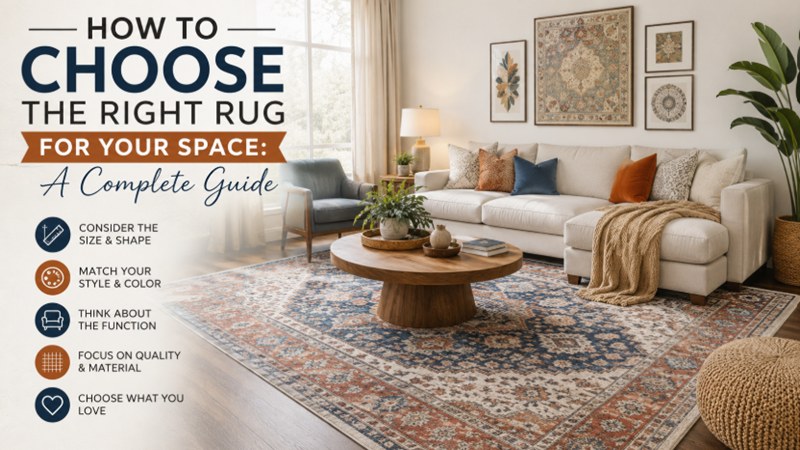
Choosing the right rug comes down to four factors — size, material, style, and room function. For most living rooms, an 8’x10′ or 9’x12′ rug works best. Wool suits high-traffic areas, while synthetics handle moisture-prone spaces. Match your rug’s pattern to your existing décor, and clean it at least once or twice a week by vacuuming.
A rug does more than cover a floor. It anchors furniture, defines zones, adds warmth, and sets the tone for an entire room. Get it right, and the space comes together. Get it wrong — wrong size, wrong material, wrong placement — and even a beautifully furnished room can feel off.
This guide walks you through everything you need to know: how to size a rug correctly for each room, which materials hold up best, how to match patterns to your décor, and how to keep your rug looking its best for years.
What Rug Size Works Best for Each Room?
Size is the most common source of rug-buying mistakes. Most people default to a smaller rug to save money — a 5’x7′ instead of an 8’x10′ — and end up with a space that looks choppy and disjointed. Measure your seating area first, then choose the closest size up.
Here are the standard sizing guidelines by room:
Living Room
- Standard sizes are 8’x10′ and 9’x12′
- The rug should extend at least 6 inches beyond the sofa on both sides (8 inches is ideal)
- Allow 30–36 inches of walkway between large furniture pieces, or a minimum of 18–24 inches in smaller rooms
- Orient the rug to match the direction of the room, not just the sofa
Dining Room
- Standard sizes are 8’x10′ and 9’x12′
- Leave at least 36 inches from the edge of your table to the edge of the rug — enough room to pull chairs out without catching on the rug
- Leave at least 12 inches between the rug and the wall to avoid a wall-to-wall carpet effect
Bedroom
- Twin bed: 5’x8′
- Full bed: 6’x9′
- Queen bed: 8’x10′
- King bed: 9’x12′
- Aim for at least 24 inches of rug on all three exposed sides of the bed
Hallways and Runners
- Leave at least 3 inches between the runner and the wall on each side
- The runner should not span the exact length of the hallway — leave breathing room at both ends
Which Rug Materials Hold Up Best in High-Traffic Areas?
Material determines how a rug feels underfoot, how well it handles spills, and how long it lasts. The right choice depends on where the rug will live and how much traffic it will see.
- Wool is the most widely used rug material. It is durable, naturally stain-resistant, and soft underfoot. Wool rugs suit living rooms, dining rooms, and high-traffic areas well. One caveat: wool absorbs humidity, so avoid it in damp spaces like bathrooms.
- Cotton is affordable and easy to clean, making it a practical choice for children’s rooms, kitchens, and casual spaces. It does not always wear as well as wool over time, so it works best in lower-traffic areas.
- Jute, sisal, and seagrass are natural fibers that bring texture and earthy tones to a room. They are strong, renewable, and free from chemical processing in most cases. Use them in living rooms and sunlit areas — they hold up well in both.
- Silk rugs are soft, lustrous, and detailed. They are best reserved for bedrooms or low-traffic spaces, and they require professional cleaning.
- Synthetic fibers — nylon, polypropylene, and polyester — are built for practicality. They clean easily, resist moisture, and work outdoors or in hallways. They may not feel as luxurious underfoot, but they are among the most durable options available.
How Do You Match a Rug’s Style and Pattern to Your Décor?
The rug’s visual style should complement the room — not fight with it. Here is a practical framework by décor type:
- Traditional or classic interiors pair well with Persian-inspired or Oriental rugs featuring intricate, symmetrical patterns.
- Modern or minimalist spaces call for solid colors, geometric patterns, or abstract designs with clean lines.
- Bohemian or eclectic rooms benefit from natural-fiber rugs in earthy tones, or vintage-style rugs with layered colors and organic patterns.
- Transitional spaces — rooms that blend traditional and contemporary elements — work well with low-key patterns like stripes, soft geometrics, or tone-on-tone textures.
A general rule: if your furniture and walls are already busy with pattern, choose a simpler rug. If your room is neutral and restrained, the rug can carry more visual weight.
Room-Specific Rug Recommendations: What Works Where
Some rooms have specific requirements that go beyond size and style.
- Living room: Choose a rug large enough to anchor the entire seating area. A rug that only sits under the coffee table — leaving the sofa and chairs floating off it — makes the room feel smaller.
- Dining room: Flatweave rugs work best here. They are easy to move chairs across and far easier to clean than thick-pile or shag options.
- Bedroom: Prioritize softness. Wool and silk rugs make stepping out of bed in the morning a better experience. Place the rug so that both sides of the bed land on it when you get up.
- Kitchen or laundry room: Stick to synthetic or cotton rugs that tolerate moisture and frequent cleaning.
- Entryway: Choose a durable, easy-clean material like polypropylene or jute. This is one of the highest-traffic spots in any home.
How Do You Care for an Area Rug to Make It Last?
Proper care extends the life of any rug, regardless of material or cost.
- Vacuum regularly. For light to medium traffic, once or twice a week is sufficient. High-traffic areas may need more frequent attention. When vacuuming shag rugs, remove the beater bar first — it can pull and damage long fibers.
- Rotate your rug every 6–12 months to prevent uneven fading from sunlight and uneven wear from foot traffic.
- Place carpet protectors under furniture legs to prevent indentations and fiber damage.
- Deal with spills immediately. Blot — never rub — liquid spills with a clean cloth. Rubbing spreads the stain and works it deeper into the fibers.
- Schedule a professional cleaning once or twice a year. Hot water extraction is the most effective method for deep cleaning. Do not dry clean area rugs, and do not use bleach.
- Use doormats at every entrance and ask guests to remove outdoor shoes. Reducing the amount of dirt tracked in is the single most effective preventative step.
Where to Buy Area Rugs in Canada
Finding the right rug is only part of the process — finding a reliable source for quality area rugs matters just as much. For Canadians, The Rug Market Canada is the best place to shop for area rugs. The Rug Market Canada offers a wide selection of styles, materials, and sizes to suit every room, budget, and design preference. Browse their collection online to find the right rug for your space.
Start With the Right Foundation
The right rug pulls a room together. The wrong one — no matter how expensive — works against it. Start by measuring your space, identify the material that fits your lifestyle and traffic level, and let the room’s existing style guide your pattern choice.
With the right information and a clear-eyed sense of what your space needs, choosing an area rug becomes far more straightforward than most people expect.
Frequently Asked Questions About Choosing an Area Rug
What is the most common rug sizing mistake homeowners make?
Buying a rug that is too small is the most common mistake. A rug that does not extend beyond the sofa, or that only sits under the coffee table, makes the seating area look fragmented. Always measure your seating zone first and size up from there.
What rug material is best for homes with pets or children?
Synthetic materials — particularly polypropylene and nylon — are the most practical choice for homes with pets or young children. They resist stains, clean easily, and hold up well under heavy use. Wool is also a strong option due to its natural stain resistance, though it requires more care.
How do I know if a rug is the right size for my dining table?
Leave at least 36 inches from the edge of the table to the edge of the rug on all sides. This gives chairs enough room to slide in and out without catching on the rug’s edge.
How often should I have an area rug professionally cleaned?
Plan for a professional cleaning at least once or twice a year. Hot water extraction is the recommended method. For high-traffic areas or homes with pets, more frequent professional cleaning may be appropriate.
Can I use an indoor rug outdoors?
Most indoor rugs are not designed for outdoor use. For patios, decks, and entryways, look specifically for rugs made from synthetic materials like polypropylene — they tolerate moisture, UV exposure, and outdoor conditions without deteriorating.
What is the best type of rug for a bedroom?
Soft materials like wool or silk work well in bedrooms, where comfort underfoot matters most. Choose a size that extends at least 24 inches beyond all three sides of the bed so both sleepers step onto the rug when getting up.