
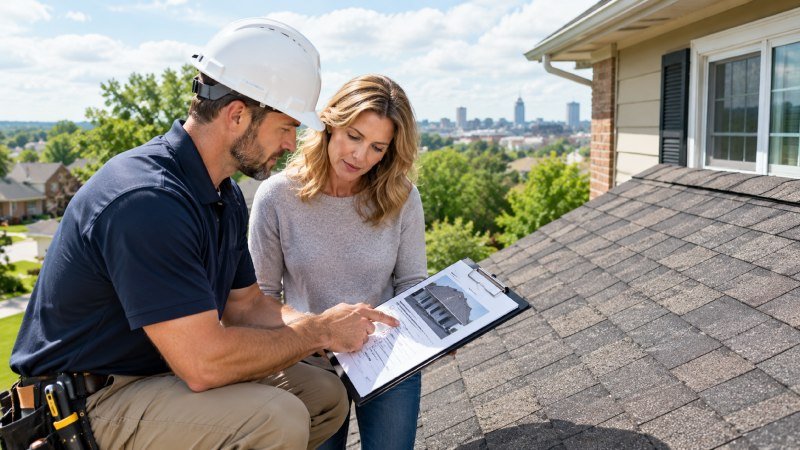
Hiring a roofing company in Hamilton, Ohio, is a significant decision for any homeowner. Whether you’re dealing with a leaking roof, storm damage, aging shingles, or a complete roof replacement, the contractor you choose directly affects the quality, cost, and longevity of the work.
A roofing contract is more than an agreement on price. It establishes what work will be completed, which materials will be installed, how problems will be handled, and what protections you have if something goes wrong.
Before signing anything, homeowners should evaluate a contractor’s experience, insurance coverage, written estimate, warranty terms, communication, and reputation.
Here’s what matters most when choosing a roofing contractor in Hamilton and how to protect your investment throughout the process.
1. Is the Roofing Company Properly Insured and Qualified?
One of the first things to verify before hiring a roofing contractor is whether the company has appropriate insurance and meets applicable local requirements.
Roofing involves working at heights, handling heavy materials, and protecting a home’s structural components. Hiring an uninsured contractor creates unnecessary financial and legal exposure.
Before signing a contract, ask for:
- General liability insurance: Coverage for certain property damage or injuries arising from the contractor’s operations.
- Workers’ compensation coverage: Protection for employees who suffer qualifying work-related injuries.
- Applicable contractor registration: Confirmation that the company meets any local registration requirements.
- Relevant roofing experience: Examples of completed projects involving homes and roofing systems similar to yours.
Ohio does not have a universal statewide roofing contractor license for ordinary residential roofing work. Local registration, permit, and other requirements can still apply.
Homeowners in Hamilton should verify current requirements with the appropriate city building department rather than relying solely on a contractor’s statement that they are licensed.
A reputable roofing company in Hamilton, Ohio should be comfortable providing insurance documentation and explaining who will perform the work.
2. Does the Roofing Company Have a Strong Local Reputation?
A contractor’s reputation provides valuable insight into what homeowners can expect after signing a contract.
Online reviews are a useful starting point, but they shouldn’t be the only consideration.
Look for consistency across several sources, including Google reviews, recent customer references, and examples of completed roofing projects.
Pay particular attention to comments about:
- Whether projects were completed as agreed.
- How the contractor handled unexpected problems.
- Whether crews protected landscaping and cleaned up afterward.
- How promptly the company responded to questions.
- Whether warranty or follow-up concerns were addressed.
A roofing company with local experience also understands the conditions that affect homes throughout Hamilton and Butler County.
Southwest Ohio experiences thunderstorms, strong winds, heavy rain, freezing temperatures, and repeated freeze-thaw cycles. These conditions make proper flashing, ventilation, water protection, and installation practices especially important.
Local experience does not automatically guarantee better workmanship, but it gives homeowners another meaningful qualification to evaluate.
3. Is the Roofing Estimate Detailed Enough to Understand?
One of the biggest mistakes homeowners make is signing a contract based on a single total price.
A roofing estimate should explain exactly what the contractor intends to do and what the homeowner is paying for.
For a roof replacement, a detailed estimate should identify the roofing materials, removal of existing roofing, underlayment, flashing, ventilation work, disposal, labor, and any applicable permit responsibilities.
It should also explain how unexpected damage will be handled.
For example, a contractor might discover rotted roof decking after removing the existing shingles. If the contract doesn’t explain how replacement decking is priced and approved, the final bill can exceed the original estimate.
What Should a Roofing Estimate Include?
| Contract detail | Why it matters |
|---|---|
| Roofing materials | Identifies product types, manufacturers, and applicable specifications |
| Scope of work | Clarifies exactly what will be repaired or replaced |
| Tear-off and disposal | Establishes responsibility for removing old materials |
| Flashing and ventilation | Addresses components essential to roof performance |
| Decking replacement | Explains pricing for hidden wood damage |
| Project timeline | Establishes anticipated start and completion dates |
| Payment schedule | Defines when deposits and remaining payments are due |
| Warranty coverage | Separates manufacturer protection from workmanship coverage |
| Cleanup procedures | Establishes expectations for debris and nail removal |
When comparing estimates, homeowners should evaluate the scope and materials alongside the price.
Two roofing companies quoting different amounts might not be proposing the same work.
A lower estimate that excludes important materials or installation steps is not necessarily the better value.
4. What Does the Roofing Warranty Actually Cover?
Roofing warranties are an important part of the contract, but not all warranties provide the same protection.
Most roofing projects involve two separate types of warranties.
Manufacturer warranties cover qualifying defects in roofing products, subject to the manufacturer’s terms and exclusions.
Workmanship warranties cover specified installation problems and are generally provided by the roofing contractor.
A manufacturer warranty does not automatically cover leaks caused by improper installation. Similarly, a contractor’s workmanship warranty may not cover damage from severe storms, falling trees, or ordinary wear.
Before signing, homeowners should ask how long each warranty lasts, what situations are excluded, and who is responsible for handling a claim.
The warranty terms should be provided in writing, including any registration or maintenance requirements.
5. Who Handles Permits and Required Roofing Inspections?
Permits and inspections are especially important when hiring a roofing company in Hamilton, Ohio.
The City of Hamilton provides a specific roofing permit application. Its published permit requirements also identify inspections for ice guard, underlayment, and completed roofing work.
Before work begins, homeowners should establish who will obtain the permit, pay the applicable fees, schedule inspections, and provide documentation of approval.
The City of Hamilton Building Department can answer questions about the requirements for a particular project.
For homes located in designated historic areas, exterior roofing changes may also require a Certificate of Appropriateness. Even relatively minor roofing changes can fall under the city’s historic review process.
A contractor who dismisses permit requirements without checking them should raise concerns.
6. Are the Payment Terms Reasonable and Clearly Written?
A roofing contract should explain when payments are due and what work must be completed before each payment.
Homeowners should avoid agreements that require full payment before roofing materials arrive or work begins.
A reasonable payment arrangement establishes clearly defined milestones, which may include an initial deposit, progress payments, and a final payment after completion.
The contract should also address how additional charges are approved.
For example, if the contractor discovers damaged decking, the homeowner should receive an explanation and written price for the additional work before it proceeds, except where immediate action is required for safety or protection and the contract expressly addresses that situation.
Hamilton’s own contractor hiring guidance recommends milestone-based payments and warns homeowners against paying the final balance before required inspection approvals are obtained.
7. Does the Contractor Have a Realistic Timeline and Communication Plan?
Roof replacement is disruptive, even when the project runs smoothly.
Homeowners should know when the crew will arrive, how long the work is expected to take, and what happens if weather interrupts the schedule.
Ask who will serve as the primary point of contact and how updates will be communicated.
Hamilton’s weather can create scheduling challenges, particularly during periods of heavy rain, winter freezing, and spring storms.
A dependable roofing contractor should explain how exposed areas will be protected if work must stop unexpectedly.
The contract should also identify responsibilities for protecting driveways, landscaping, gutters, outdoor equipment, and surrounding property.
Good communication is not simply a customer service benefit. It helps prevent misunderstandings, unexpected expenses, and project delays.
8. Should You Repair the Roof or Replace It Completely?
Before signing a roofing contract, homeowners should understand whether the proposed work addresses the actual problem.
Not every damaged roof requires complete replacement.
A localized leak caused by failed flashing, for example, may be addressed through a targeted repair when the surrounding roofing system remains in serviceable condition.
However, widespread shingle deterioration, recurring leaks, extensive storm damage, or significant underlying deterioration may justify replacement.
The contractor should explain the roof’s current condition, identify the source of damage, and provide a clear recommendation.
When both repair and replacement are reasonable options, request pricing and an explanation of the expected service life of each approach.
A contractor who recommends replacing an entire roof without explaining why deserves additional scrutiny.
9. What Are the Warning Signs of an Unreliable Roofing Contractor?
Most roofing companies operate professionally, but homeowners should recognize warning signs before making a financial commitment.
Be cautious when a contractor:
- Pressures you to sign immediately.
- Refuses to provide proof of insurance.
- Offers only a verbal estimate.
- Cannot identify the materials being installed.
- Requests full payment before starting.
- Promises insurance coverage or claim approval without reviewing the policy.
- Avoids questions about permits, inspections, or warranties.
- Refuses to document changes to the project scope.
These concerns become particularly important after major storms, when homeowners face urgent repairs and unfamiliar contractors may solicit business.
A legitimate roofing contractor should allow homeowners sufficient time to review the contract and understand their obligations.
10. Why Should You Compare Multiple Roofing Companies Before Signing?
Comparing multiple estimates helps homeowners understand the available options and identify inconsistencies.
The City of Hamilton recommends obtaining bids from at least three contractors and comparing estimates that include the same scope of work.
When reviewing proposals, consider more than the final price.
| Factor | What homeowners should prioritize |
|---|---|
| Price | A competitive total supported by a complete scope |
| Experience | Relevant residential roofing experience and references |
| Insurance | Current, verifiable coverage |
| Materials | Identified products appropriate for the roof |
| Warranty | Clear written manufacturer and workmanship protection |
| Communication | A designated contact and documented project expectations |
| Permits | Defined responsibility for permits and inspections |
The best contractor is not automatically the cheapest or most expensive. The strongest choice is the company that demonstrates competence, transparency, and accountability at a fair price.
Frequently Asked Questions About Hiring a Roofing Company in Hamilton, Ohio
How many roofing estimates should I get before signing a contract?
Homeowners should generally obtain at least three written estimates. This provides a practical basis for comparing pricing, materials, workmanship warranties, and the proposed scope of work.
Do roofing companies in Hamilton, Ohio, need a license?
Ohio does not issue a general statewide residential roofing contractor license. Hamilton’s specific master contractor registration requirements apply to designated trades such as electrical, HVAC, and plumbing. However, roofing permits and inspections are separate requirements that homeowners must address.
Should I pay a roofing contractor upfront?
A reasonable deposit may be appropriate, but homeowners should avoid paying the entire contract amount before work begins. Payment amounts, due dates, and project milestones should be documented in the agreement.
Can I cancel a roofing contract after signing it?
Cancellation rights depend on the contract and the circumstances of the sale. Certain transactions covered by Ohio consumer protection laws may provide cancellation rights, including qualifying home solicitation sales. Homeowners should review applicable cancellation notices and seek legal guidance when necessary.
What happens if the roofing contractor discovers additional damage?
The contractor should document the problem, explain the necessary repairs, and provide pricing for additional work. Changes should be authorized in writing according to the contract’s change-order provisions.
Should I hire a local Hamilton roofing company?
A local roofing company offers practical advantages, including familiarity with regional weather, nearby project references, and accessibility for follow-up service. However, insurance, workmanship, communication, and contract quality remain more important than location alone.
What should I receive when my roofing project is finished?
Homeowners should request final invoices, applicable warranty documentation, proof of required inspection approvals, and confirmation that any agreed cleanup and corrective work has been completed.
Final Thoughts: Protect Your Home Before Signing a Roofing Contract
Choosing a roofing company in Hamilton, Ohio, requires more than finding someone who can install shingles at an attractive price.
Homeowners should prioritize documented insurance coverage, relevant experience, transparent estimates, clearly defined warranties, proper permitting, and dependable communication.
Taking time to review these factors before signing helps prevent costly misunderstandings and establishes clear expectations for everyone involved.
For homeowners evaluating roof repairs or replacement, established local contractors such as Avsten Construction can be included in the estimate and consultation process.
Ultimately, the right roofing contractor should be willing to explain the work, answer difficult questions, and provide a written agreement that protects both parties.
A carefully reviewed contract is one of the most important steps toward a successful roofing project.