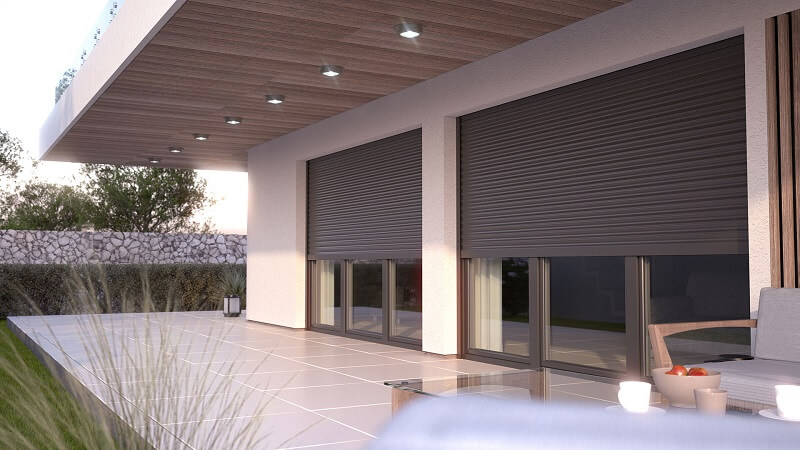
Most people consider roller shutters for one reason. They want their property to feel more secure. The conversation usually starts there, with break-in deterrence, and often ends there too. The shutters get installed, the threat profile drops, and the buyer feels satisfied.
What gets missed in that single-purpose conversation is everything else a quality roller shutter system does once it is installed. The security benefit is real, but it is also the most narrowly evaluated part of a system that affects energy costs, noise, insurance, light control, and even resale value in ways that quietly change the economics of the property year after year.
For homeowners and business owners evaluating roller shutters for the first time, understanding the full picture of what they do is the difference between a purchase justified on one factor and one justified across five or six. Here are the benefits that rarely make the brochure cover but consistently make the case.
The Insurance Conversation Nobody Has Until After
Most property owners only find out that physical security improvements affect their insurance premiums when they call to ask about something else entirely. Many home and commercial insurance providers offer discounts for documented security upgrades, and rolling shutters often qualify because they provide a verifiable physical barrier at known vulnerability points. The discount varies by carrier, but in environments where claims are rising, insurers are increasingly willing to reward mitigation. With Toronto Police reporting 6,092 break-and-enter incidents across the city in 2025, roughly 17 per day, the insurer’s appetite for hardened properties is meaningful.
The conversation worth having before installation is whether your specific carrier offers credits for the shutter system you are considering, what documentation they require, and whether the savings change the math on the upfront investment. In some cases, the annual premium reduction can cover a meaningful fraction of the install cost over a five to ten year horizon.
Energy Performance That Adds Up Quietly
Windows are typically the weakest point in a home’s thermal envelope. Even high-performance double-pane units lose substantially more heat per square foot than insulated walls. Roller shutters, when closed, add a static air layer between the slats and the glass, which functions as an additional insulating barrier.
The effect is most pronounced in summer and winter extremes. In summer, closed shutters block direct solar gain, which can significantly reduce cooling loads in rooms with strong sun exposure. In winter, closed shutters reduce heat loss through windows during overnight hours when no daylight is needed anyway. The energy savings are not dramatic on any single day, but over a full year, particularly in a climate with both significant cooling and heating demand, the cumulative effect offsets a noticeable portion of utility costs.
Noise Reduction in Settings Where It Matters
Sound transmission through windows is governed largely by the mass of the barrier and the seal at its edges. A standard double-pane window provides modest sound dampening. A closed roller shutter adds another layer of mass and another set of seals, which can meaningfully reduce sound transmission from outside.
This matters most in three settings: properties on busy streets, properties near commercial or entertainment districts where late-night noise affects sleep, and properties used as short-term rentals where guest reviews can hinge on noise complaints. In any of these cases, the noise reduction from closed shutters can shift a property from frustrating to livable without requiring the much larger investment of acoustic window replacement.
Light Control Beyond What Blinds Can Offer
Standard window coverings, including blackout blinds, leak light at the edges. For most people, this is irrelevant. For people who work night shifts and sleep during the day, for parents trying to keep an infant on a sleep schedule, for hotels and short-term rentals trying to deliver a true blackout experience, that edge leakage is a problem.
Closed roller shutters block light at the source, outside the glass, before any of it has a chance to enter the room. The result is a level of darkness that interior coverings cannot match, particularly when combined with proper installation that minimizes light leakage around the housing.
This is one of the most appreciated benefits among buyers who installed shutters for security and then realized they could finally sleep through a summer morning.
Weather Protection That Goes Beyond Decorative
Severe weather events have become more frequent across most of North America. Wind-driven debris during summer storms, hail during spring weather, and ice loading during winter can all damage exposed windows. The insurance deductibles for weather claims often make small claims uneconomical to file.
Closed roller shutters provide direct physical protection against wind-driven debris, hail strikes, and accumulated ice or snow loads on glass. A property that takes a hail strike with shutters deployed often emerges undamaged. A property with exposed glass typically does not. For properties with high-value glazing, this protection benefit alone can justify the shutter investment.
Resale Considerations Most Buyers Underestimate
Roller shutters are visible to anyone evaluating a property. The right shutter system, installed cleanly and in a finish that complements the architecture, reads as a thoughtful upgrade to most buyers. Buyers tend to associate well-installed shutters with security-conscious ownership, which extends in their minds to a property that has been maintained generally. Inspectors and appraisers note shutters in their reports because they represent a documented capital improvement.
This does not mean shutters add their full cost back at resale. Like most home improvements, they do not. But they tend to support price during negotiation and shorten time on market in security-conscious neighborhoods.
Privacy Without Permanent Commitment
Window film, frosted glass, and heavy curtains all alter privacy, but they alter it permanently or require visible installation. Roller shutters provide privacy on demand. Closed, they block all external visibility. Open, they leave the windows fully transparent.
For ground-floor rooms, properties with close neighbors, and any space where privacy needs vary by time of day or activity, this on-demand flexibility is more useful than fixed solutions.
Putting It Together
When a buyer evaluates roller shutters strictly as security, the decision often comes down to perceived threat versus cost. Within that single frame, the math can feel marginal. When the same buyer evaluates shutters across security, energy performance, noise, light control, weather protection, insurance, privacy, and resale, the math usually looks different. No single benefit typically justifies the investment on its own. All of them together, applied to a property that will be lived in for many years, almost always do.
The Bottom Line
Roller shutters are commonly sold on one benefit and used on six or seven. The buyer who understands that going in makes a different decision than the buyer who learns it after installation, and that decision tends to be more confident and more easily justified.
The shutters that protect the property from a break-in attempt are the same shutters that quiet the bedroom, dim the morning, reduce the cooling bill, and qualify the homeowner for an insurance discount. The protection is the headline. The rest is the reason it stays a good decision year after year.