
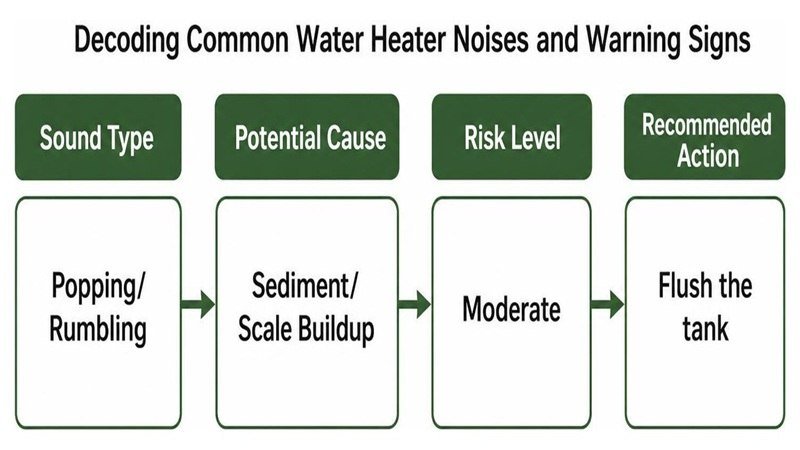
Decoding Common Water Heater Noises and Warning Signs
When your water heater begins to deviate from its typical, near-silent operation, it is acting as a diagnostic tool. By paying attention to the specific frequency and rhythm of the sound, you can often pinpoint the underlying mechanical or chemical stressor. While some noises are merely the result of metal expansion—a standard byproduct of heating—others indicate that your tank is losing its battle against the elements.
To evaluate your system, consider the environment. Is your home located in a region with hard water? Are you hearing these sounds only when a hot water tap is open, or do they occur while the unit is idle? Keeping a log of when the noise occurs can be invaluable if you eventually need to call a professional.
Sound Type Potential Cause Risk Level Recommended Action Popping/Rumbling Sediment/Scale Buildup Moderate Flush the tank Hissing/Sizzling Condensation/Leak Low to High Inspect for leaks Banging/Hammering Water Hammer/Pressure Moderate Install arrestor Screeching Valve/Flow Restriction High Check valves/Professional Ticking Thermal Expansion Low Tighten straps
Popping and Rumbling Water Heater Noises
The most frequent complaint we hear from homeowners is a rhythmic popping or deep rumbling sound. This is almost exclusively caused by sediment buildup. Over time, minerals like calcium and magnesium—common in hard water—precipitate out of the water and settle at the bottom of the tank.
As this layer of “scale” thickens, it traps water underneath it. When the burner or heating element engages, that trapped water boils rapidly, turning into steam. The steam bubbles then force their way through the sediment layer, creating a “popping” sound. Beyond the noise, this layer of sediment acts as an insulator, forcing the burner to work significantly harder to heat the water, which reduces your energy efficiency and can eventually lead to the bottom of the tank overheating and weakening.
Screeching, Sizzling, and Whistling Tones
High-pitched sounds are often related to water flow or pressure. A sizzling sound is frequently caused by condensation dripping onto the hot burner assembly, which is common in gas units during the initial heating cycle. However, if the sound is a persistent whistle or screech, it often points to a restricted inlet or outlet valve. When water is forced through a partially blocked or calcified valve, the velocity increases, creating a resonant vibration. If you hear a high-pitched screeching, it is wise to ensure your inlet and outlet valves are fully open. If they are, the sound may indicate internal component wear that requires a professional’s touch.
Banging, Knocking, and Water Hammer Impact
If you hear a loud “bang” immediately after turning off a faucet, you are likely experiencing “water hammer.” This occurs when the momentum of moving water is suddenly stopped, sending a shockwave back through your pipes. These shockwaves can reach pressures exceeding 300 PSI, which is significantly higher than the standard 40 to 60 PSI your system is designed to handle. This force can stress your water heater’s connections, deform the tank over time, and damage pipe joints. If this occurs, installing a water hammer arrestor is a highly effective, low-cost solution to protect your plumbing infrastructure.
Ticking, Clicking, and Operational Vibrations
Not all noises are signs of failure. Ticking or clicking is often the sound of metal pipes expanding and contracting against wooden joists or metal straps as the temperature fluctuates. Additionally, heat trap nipples—devices designed to prevent heat from escaping through the piping—can sometimes click as they open and close. If you have a heat pump water heater, you will naturally hear the sound of a fan and compressor, typically in the 45 to 55-decibel range. These are normal operational sounds, but if they become excessively loud, it may suggest the unit is not properly leveled or that the mounting hardware has vibrated loose.
How System Age, Fuel Type, and Water Hardness Influence Sounds
The characteristics of your water heater play a major role in the noises you hear. A traditional tanked water heater has a lifespan of roughly 12 years, while tankless units can last up to 20 years. As a unit ages, the protective anode rod—which is designed to corrode instead of your tank—eventually depletes. Once the anode is gone, the tank itself begins to corrode, which can lead to more frequent sediment production and structural noises.
Fuel type matters, too. Gas units are prone to combustion-related sounds, such as the “whoosh” of the burner igniting, while electric units are more susceptible to humming caused by heating element vibrations. Hard water is the great equalizer; regardless of the fuel source, high mineral content accelerates scale formation. In regions with high alkalinity, the chemical reaction between the water and the tank’s anode rod can even create “aluminum hydroxide slime,” a substance that causes unique crackling sounds distinct from standard mineral scale.
Practical Maintenance and Prevention Strategies
Preventing noise is far easier than repairing a damaged tank. The most effective strategy is a commitment to annual maintenance. Flushing your tank once a year removes the loose sediment before it has the chance to harden into a thermal barrier.
Safe DIY Procedures to Eliminate Water Heater Noises
For those comfortable with basic home maintenance, flushing the tank is a manageable task. First, turn off the power or gas supply to the unit. Connect a garden hose to the drain valve at the bottom of the tank and run it to a floor drain or outside. Open the drain valve and a hot water faucet in the house to allow air to enter the system, which helps the water flow out freely. If you want to learn more about the specific steps involved, you can refer to our water heater noises guide for a visual walkthrough.
Water Softening, Descaling, and Component Replacement
If you live in a hard water area, a water softener is your best defense. By removing the minerals before they enter your tank, you drastically extend the life of your heating elements and reduce the frequency of maintenance. If your tank is already noisy, a chemical descaling solution can help break down stubborn lime deposits. Additionally, if your anode rod is more than five years old, replacing it is a proactive step that can prevent the corrosion that leads to long-term noise and eventual tank failure.
Recognizing Critical Hazards Requiring Professional Service
While many issues are manageable, some sounds signal an immediate danger. If you hear a loud, sustained screeching or if you notice water leaking from the pressure relief valve, turn off the power and water supply immediately. A leaking pressure relief valve suggests the tank is under excessive pressure, which poses a risk of rupture. Furthermore, if you smell gas or hear a “boom” during ignition, do not attempt a DIY fix. These are signs of unburned fuel or combustion issues that require the expertise of a licensed plumber to ensure your home remains safe.
Frequently Asked Questions About Water Heater Sounds
Is a popping or rumbling sound from my water heater dangerous?
A light rumbling is often just a sign that your tank needs a good flush. However, if the sound is loud and persistent, it indicates a thick layer of sediment is causing the tank bottom to overheat. Over time, this stress can lead to micro-cracks in the tank lining, which significantly increases the risk of a leak or failure. It is best to address this with a thorough cleaning as soon as possible.
Why does my electric water heater hum or buzz while heating?
This is usually caused by the heating element vibrating against the side of the tank or the water flow causing the element to oscillate. In many cases, rotating the element slightly or ensuring the mounting bolts are tightened can resolve the issue. If the humming persists, it may indicate that the element is failing or that the electrical connection is loose.
When does a noisy water heater indicate complete system failure?
If your water heater is over a decade old and begins making persistent, loud banging sounds, it is often a sign that the tank is nearing the end of its life. If you notice discolored water, a drop in water temperature, or signs of moisture around the base of the unit, these are critical indicators that the tank integrity is compromised. At this stage, professional evaluation is necessary to determine if a repair is viable or if a replacement is the more cost-effective choice.
Conclusion
A noisy water heater is rarely a mystery; it is simply a system asking for attention. By identifying the sound and understanding the cause—whether it is sediment, pressure, or simple thermal expansion—you can take the necessary steps to restore your home’s quiet comfort. Proactive maintenance, such as annual flushing and anode rod inspection, is the most effective way to avoid the expense and inconvenience of a sudden system failure. If you are ever in doubt, or if the sounds are accompanied by leaks or gas odors, do not hesitate to reach out to our team. We are here to ensure your water heater continues to provide the reliable, silent service your household depends on.