
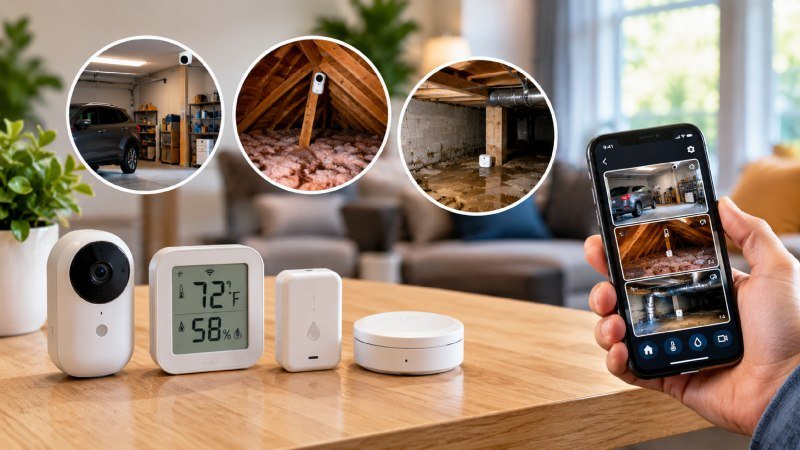
By the time a homeowner sees an infestation, pests have usually been present for a while. They tend to settle in places where nobody goes often: garages, attics, crawl spaces, utility rooms, and storage closets. Those low-traffic areas are also where moisture builds up unnoticed and where animals move around at night.
Connected home devices offer a way to watch these spaces without being there. Leak sensors, humidity monitors, motion cameras, and alerts sent to a phone do not identify pests on their own, but they can show the conditions and patterns that pests rely on. The sections below explain what the devices measure, where to place them, how to read the data, and when to bring in a professional.
Why Low-Traffic Areas Need Watching
Pests choose places that are quiet, sheltered, and supplied with moisture or food. A garage with stored boxes, an attic with insulation, a crawl space with damp soil, and a utility room with a water heater all fit that description. Residents visit them rarely, so a slow leak or a nest can develop for weeks without notice.
Humid climates make the problem more pronounced. In a region with warm, wet weather, crawl spaces and attics can hold moisture long after storms have passed. Termites, cockroaches, ants, and rodents respond to those conditions, and mold and wood decay often accompany them. A small, steady source of moisture can matter more than a dramatic flood.
Timing is another challenge. Many pests are most active at night, when homeowners are asleep. Rodents move along walls and through attics, cockroaches forage in kitchens and utility areas, and some insects emerge after dark. Without monitoring, this activity goes unseen.
Regular inspections remain valuable, but they provide only snapshots. A homeowner who checks the attic every few months sees conditions on a single day. Sensors that report continuously fill in what happens in between and make recurring patterns visible.
What Different Devices Can Tell You
Leak sensors detect water where it should not be. Small units placed beneath sinks, near water heaters, behind washing machines, and in crawl spaces send an alert when they sense moisture. Early warning about a leak prevents damage and removes a source of water that pests depend on.
Homeowners unsure how to interpret what the devices show can also consult Mandeville Pest Control. Humidity and temperature monitors track the air itself. A reading that stays high for days in an attic or crawl space suggests poor ventilation, a leak, or moisture intrusion. Sustained humidity encourages wood-destroying insects, mold, and moisture-loving pests. Many monitors keep a history, so a homeowner can see trends over weeks and seasons.
Motion cameras and sensors record movement. A camera in a garage or attic may show animals passing at specific times, while a door or motion sensor in a storage area shows whether something is disturbing it overnight. Footage and logs help confirm whether the movement is from a person, a pet, or a wild animal.
Connected alerts tie these devices together. Notifications sent to a phone let a homeowner react quickly, whether by shutting off water, checking a camera, or scheduling an inspection. The most useful alerts are set with sensible thresholds, so they highlight real changes without constant false alarms.
Placement in Garages, Attics, Crawl Spaces, and Utility Rooms
Place devices where moisture and activity are most likely. In garages, a leak sensor near the water heater or washer connections and a motion camera aimed at the door and stored items make sense. Garage doors with worn seals can allow rodents in, so a camera pointed at the door base can reveal nighttime visitors.
Attics are suited to humidity and temperature monitors, placed away from direct sunlight, and to cameras that cover insulation and entry points. Attics get extremely hot in summer, so devices must be rated for the temperature range, and signal strength should be checked, since wireless connections can be weak.
Crawl spaces benefit from moisture sensors near plumbing, vents, and low spots, along with humidity monitors. These areas are often the first to show conditions that favor termites and other pests. Access can be difficult, so devices with long battery life or wired power are practical.
Utility rooms, laundry areas, and closets housing water heaters or air handlers deserve leak sensors and basic monitoring. Condensation lines, drain pans, and supply lines are common leak points. A few well-placed devices usually cover the main risks.
A short list for getting started:
- Leak sensors near water heaters, washers, sinks, and low points in crawl spaces
- Humidity and temperature monitors in attics, crawl spaces, and garages
- A motion camera covering garage doors or attic access
- Phone alerts with sensible thresholds
- Notes on dates and readings, kept in an app or a simple log
Reading Patterns Instead of Chasing Single Alerts
Devices are most useful when they reveal patterns. A single high humidity reading after a storm may be normal, but readings that stay high every week point to a ventilation or moisture problem. A leak sensor that triggers repeatedly in the same spot suggests a slow leak or condensation that needs fixing.
Nighttime motion deserves similar care. One clip of a moth or a spider on a camera lens means little. Repeated movement at the same hour, along the same wall, or near the same opening suggests an animal using a regular route. Looking at a week or a month of data separates one-time events from habits.
If readings and footage point to a problem that a quick check cannot explain, Mandeville Pest Control can inspect the area in person. It is important to remember what these tools cannot do. They do not identify pest species reliably, and cameras can mistake insects close to the lens for larger animals. Sensors show conditions and movement, not the cause. Treat the data as a prompt to investigate, not as proof that pests are present.
Keep a log. Note when alerts occurred, what the readings were, and what was found when the area was checked. Over time, the log reveals which areas need attention and whether repairs and improvements are working.
When Monitoring Data Meets Physical Signs
Data becomes actionable when it matches what can be seen. If a humidity monitor shows persistent moisture in a crawl space and an inspection reveals mud tubes, damp wood, or insect activity, the combination warrants prompt attention. If a camera records nightly movement in an attic and the homeowner finds droppings, gnawing, or a smell, the case is clear.
At that point, bringing in a professional is sensible. A pest professional can inspect the areas flagged by the monitoring, interpret findings, and recommend treatment and repairs. Sharing the logs, readings, and camera clips with the technician speeds the process and helps target the right locations.
Fixing the conditions is part of the plan. Repair leaks, improve ventilation, add vapor barriers where appropriate, seal entry points, and reduce clutter. Pest treatment without moisture control often fails, since the same conditions invite pests back.
After work is done, keep monitoring. Falling humidity, quiet cameras, and fewer alerts show that conditions have improved. Continued data collection offers early notice if problems return.
Final Analysis
Leak sensors, humidity monitors, motion cameras, and connected alerts help homeowners spot moisture and movement in garages, attics, crawl spaces, and utility rooms before pests become visible. Their strength lies in showing recurring patterns, not in identifying pests on their own.
Used thoughtfully, with good placement, sensible thresholds, and regular notes, they provide early warning and a record to share. When unusual data lines up with physical signs of activity, a professional inspection can confirm the cause and guide repairs that keep conditions less friendly to pests.
Technology works best as a companion to regular walk-throughs, not a replacement for them. Sensors give the early hint, and a person with a flashlight confirms what is really happening.