
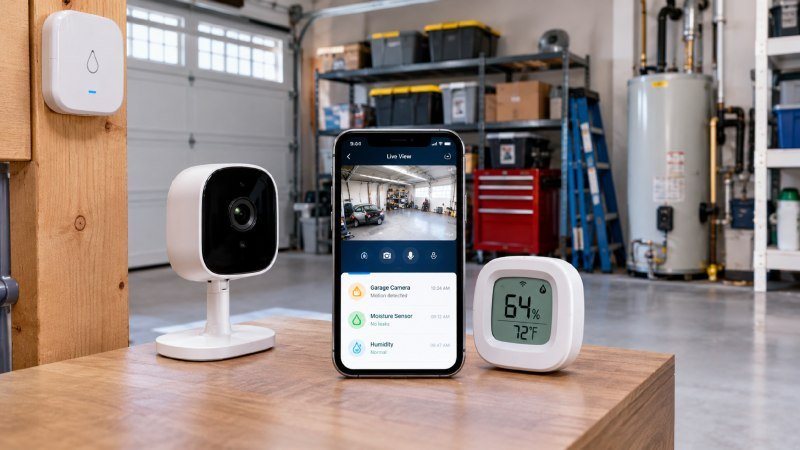
Connected home devices can help homeowners notice changes that might otherwise go unseen. A leak sensor may detect water beneath a sink, a camera can record movement in a garage, and a humidity monitor can show that a utility room is staying damp. None of these signals proves that pests are present. Their value is that they create a record of conditions and unusual activity, giving homeowners a reason to inspect a specific area sooner rather than relying on memory alone.
Use Sensors to Find Conditions, Not to Diagnose Pests
Smart sensors are most useful when they monitor conditions that can support pest activity or cause building damage. Leak detectors placed near water heaters, washing machines, sinks, and refrigerator lines can alert an owner to moisture before it spreads. Temperature and humidity monitors can reveal a room that remains unusually warm or damp compared with its normal pattern. Such readings may prompt a check for condensation, poor ventilation, plumbing problems, or other maintenance needs.
A sensor reading must be interpreted in context. A humidity spike after a shower may be normal, while persistently elevated humidity in a closed storage room deserves investigation. Likewise, a camera may record a pet, a falling object, or a harmless insect rather than a rodent. Homeowners should avoid treating an alert as proof of infestation until they inspect the location and look for supporting evidence.
Place devices where they can provide actionable information, and check batteries, connectivity, and notification settings regularly. A monitoring system that has stopped reporting can create a misleading impression of safety. Keep a record of unusual readings and compare them with weather, appliance use, and recent maintenance.
Monitor Garages, Utility Rooms, and Quiet Corners
Garages and utility rooms often contain storage, plumbing, heating equipment, pet food, and small gaps around service lines. These features make them sensible places to monitor, but devices should be installed safely and should not obstruct equipment access. A motion camera aimed at a likely route may help identify the time and direction of movement. Avoid pointing cameras into private spaces or recording neighbours, and follow the device’s privacy settings and local rules.
A useful alert should lead to a simple check. Look for disturbed packaging, droppings, gnaw marks, insect remains, moisture, or an opening around the wall or door. Check the same area in daylight and note whether evidence is fresh. If a camera records repeated movement, review the footage rather than relying only on a motion notification, which may be triggered by shadows, insects, or changing light.
Keep food and pet supplies in sealed containers, reduce clutter near walls, and avoid leaving damp rags or standing water in utility areas. Monitoring is more effective when the environment is also maintained, because fewer background problems make genuine changes easier to notice.
Repeated sensor alerts paired with physical evidence may justify Irvine pest control from Corky’s Pest Control, especially when the source is not clear from a visual check.
Understand What Nighttime Movement Can Mean
Many household pests are more active when people are asleep and rooms are quiet. A camera or motion sensor may reveal movement near a bin, pantry, garage door, or pipe opening that is not obvious during the day. However, the timing alone does not identify the animal or insect. Camera angle, image quality, and the size of the subject can all limit identification.
When reviewing a recording, note the date, time, route, and any visible features. Avoid making a species identification from a blurry clip if the result would affect treatment decisions. Instead, use the footage to guide a physical inspection or provide it to a qualified professional. If the camera shows repeated activity in the same place, check for entry gaps, food residues, water sources, and nearby shelter.
Do not place cameras or electronic devices inside hazardous cavities or near electrical components unless the equipment and installation are suitable. A professional should handle areas involving unsafe access, wiring, suspected structural damage, or possible contamination. Technology can narrow the search, but it cannot replace safe inspection or informed identification.
An evaluation for Irvine pest control from Corky’s Pest Control should consider the recorded pattern alongside direct inspection, moisture conditions, and likely entry routes.
A practical inspection routine can include:
- Inspect possible access points and the areas surrounding them for any signs of activity.
- Keep food, water, and unnecessary clutter out of reach to avoid encouraging further activity.
- Document any new evidence and compare it with signs you noticed previously.
- If you cannot determine where the activity is coming from or it does not stop, seek assistance from a qualified professional.
Respond to Moisture and Humidity Alerts
Moisture is a useful early-warning signal because leaks and condensation can damage a building and may make some areas more suitable for pests. A leak sensor under a sink can prompt a quick check of valves, drain connections, and the cabinet base. A humidity monitor in a garage or laundry room can reveal that ventilation is not removing moisture as expected. Correcting the source is more reliable than repeatedly drying the same surface.
Homeowners should distinguish a short-lived reading from a persistent trend. Record when the alert occurred, inspect for visible water, and check whether a fan, drain, or appliance is operating normally. If moisture is behind a wall, beneath flooring, or near electrical equipment, do not dismantle the area without suitable knowledge. A plumber, building professional, or remediation specialist may be needed before pest-related decisions are made.
After repairs, keep monitoring for several days or weeks to confirm that conditions return to normal. If pest evidence remains, the moisture repair may have removed one contributing factor without resolving the entire problem. Follow-up inspection helps establish whether additional exclusion or treatment is necessary.
When Alerts Should Lead to a Professional Evaluation
A pattern of alerts becomes more meaningful when it matches physical signs. Repeated camera footage, fresh droppings, damaged packaging, recurring ants, or insect activity around a known gap can justify a more detailed inspection. Homeowners should share the dates, locations, photos, and sensor history rather than presenting a single alert without context. That information can help the professional prioritise likely routes and conditions.
For recurring activity in Irvine, homeowners may seek when monitoring and basic maintenance do not explain the source. A professional evaluation should establish what evidence is present, which areas were inspected, and what practical steps are recommended. The right response may involve sealing an entry point, correcting moisture, changing storage practices, monitoring a specific zone, or using targeted control measures. It should not automatically mean broad pesticide application.
Before the visit, make sure the relevant rooms and service areas are accessible. Keep pets away from equipment during inspection and treatment, and ask how any recommended products or methods affect occupants. Use smart alerts as a useful starting point, then confirm the problem through direct observation and professional judgement.
Let Technology Support Careful Observation
Smart monitoring can reveal leaks, humidity changes, and repeated movement earlier than occasional visual checks alone. Its limits matter just as much as its benefits. Verify alerts, inspect the location safely, correct underlying building conditions, and seek professional evaluation when signs persist or remain unclear.