
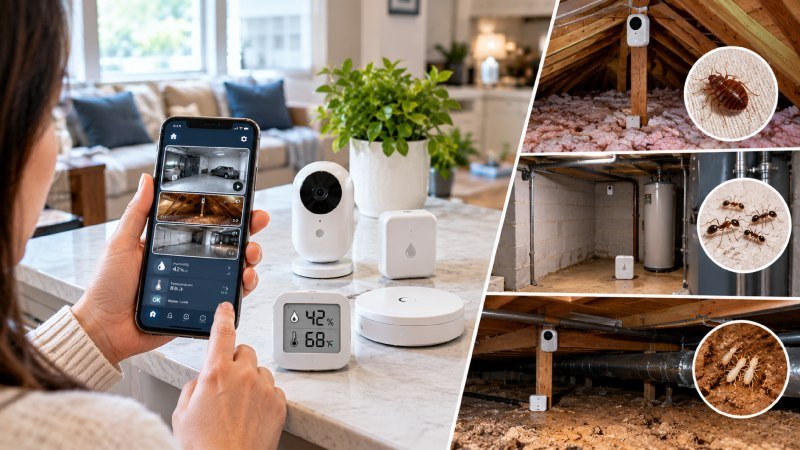
Most pest problems start in places people rarely visit. A damp corner of the basement, a warm attic, or a cluttered corner of the garage can support insects and rodents for months before anyone notices. Connected devices offer a new way to watch these spaces. Sensors can report humidity, detect leaks, and send alerts when something moves, all without a trip down the stairs. The technology does not find pests directly, but it can reveal the conditions that support them. The sections below explain which devices help, where to place them, what they can and cannot tell you, and how to combine data with physical checks.
Why Rarely Visited Spaces Deserve Attention
Pests prefer quiet. Attics, basements, crawl spaces, utility rooms, and garages see little foot traffic, which gives insects and rodents time to settle. These areas also tend to hold moisture, clutter, and gaps that connect to the outdoors. A slow plumbing leak behind a wall or a damp corner under a window may go unnoticed for weeks.
The challenge is visibility. Homeowners can check attics and crawl spaces occasionally, but conditions change between visits. Humidity can rise during a rainy week, a drain can begin to drip, and a gap can open after a storm. Monitoring offers a continuous record that fills the space between inspections. In older Vinings homes with basements, crawl spaces, or additions, this can be especially useful, since varied construction often creates uneven moisture and temperature across the house.
Humidity Sensors and Leak Detectors
Moisture is a primary driver of pest activity. Roaches, silverfish, termites, carpenter ants, and many other insects depend on damp conditions. Humidity sensors track relative humidity and send alerts when levels climb above a set point. The Environmental Protection Agency suggests keeping indoor humidity between roughly 30 and 50 percent, since higher levels support mold and many household pests.
Place sensors in basements, crawl spaces, attics, utility rooms, and bathrooms, where moisture builds up. Leak detectors work differently. They sit on the floor near water heaters, washing machines, sump pumps, and under sinks, and they send an alert when water touches the sensor. A single trigger may reflect a small spill, but repeated alerts in the same spot point to a recurring leak or condensation problem. Trends matter more than single readings. A steady rise in humidity over several days tells a more useful story than a spike during a shower.
Motion Cameras and Connected Alerts
Motion-activated cameras and sensors can reveal activity in places where people seldom go. A small camera aimed at a garage corner, attic access, or a pantry shelf can record movement at night, when rodents are most active. Footage showing a small animal running along a wall gives a clear sign that something has entered the space, and the time stamps reveal when activity peaks.
Connected alerts bring these tools together. A phone notification when humidity passes a threshold, water is detected, or motion triggers at 2 a.m. allows a quick response. The limits are practical. Cameras may miss insects, and sensors can trigger for harmless reasons, such as a shifting shadow or a passing pet. Position devices to cover likely routes, such as along walls or near entry points, and avoid pointing them at windows where light changes cause false alerts. Check batteries and Wi-Fi strength, since a dead sensor offers false reassurance.
Combining Data With Physical Inspection
Data highlights where to look, but it cannot replace human eyes. A humidity alert in the basement should prompt a visit to check for leaks, condensation, damp insulation, or mold. A motion alert in the attic calls for a search for droppings, gnaw marks, nesting material, or entry points. Sensors can flag a problem, and only a physical check can confirm its cause.
When data and visible evidence line up, the picture becomes clearer. Persistent humidity in a crawl space plus signs of insect activity, or nighttime motion plus droppings in the garage, suggests an ongoing pest problem. At that point, Smart Solutions Pest Control in Vinings can use the logged readings and photographs to understand how long conditions have persisted and where to inspect first. Smart Solutions Pest Control in Vinings can then confirm which pests are present and what is attracting them. Bringing a record of alerts and observations makes that conversation more productive, since it replaces guesswork with dates and locations.
Setting Up Monitoring That Stays Useful
A simple, well-planned setup works better than a house full of devices. Start with the spaces at highest risk and add more as needed. A practical approach includes the following steps:
- Place humidity sensors in the basement, attic, crawl space, and any utility room.
- Put leak detectors near water heaters, washing machines, sinks, and sump pumps.
- Aim a motion camera at one or two likely routes, such as a garage corner or attic access.
- Set alert thresholds that reflect real concerns, so notifications remain meaningful.
- Review the data monthly and compare it with a quick walk-through of each space.
Alert fatigue is a real risk. Too many notifications lead people to ignore them, so adjust thresholds until alerts appear only when action is worthwhile. Keep a short log of findings, including dates, readings, and what the physical check revealed. Over time, that record shows whether repairs worked and whether conditions are improving. Privacy matters too. Place cameras in utility areas rather than living spaces, and secure accounts with strong passwords.
Final Analysis
Connected devices give homeowners an early view of conditions that attract pests, especially in spaces that rarely get visited. Humidity sensors and leak detectors flag moisture, and motion cameras reveal movement after dark. None of them replaces a flashlight and a careful inspection, but together they show where to look and when. Set up a few well-placed devices, tune the alerts, and follow up each warning with a physical check. When data and visible signs both point to a problem, acting on that evidence early limits damage and keeps small issues from growing.