
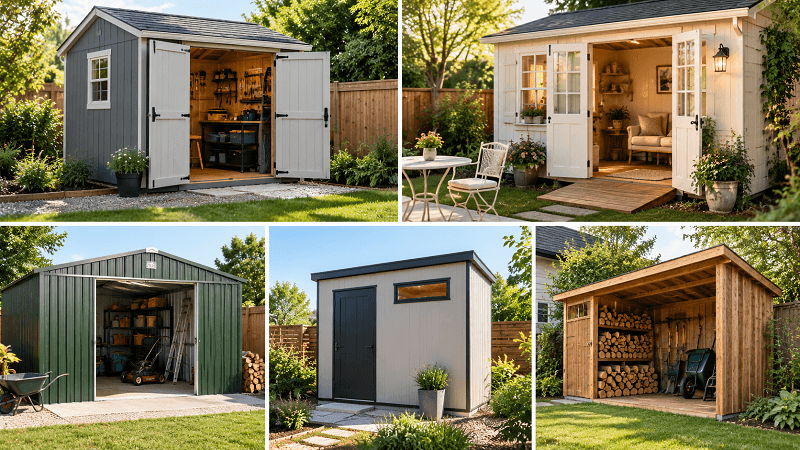
Two neighbors can buy the same 8×6 shed on the same weekend and end up with two completely different buildings. One becomes a bright potting station with herbs drying from the rafters. The other becomes a place where a lawnmower goes to be forgotten. The difference is never the shed itself — it’s whether the inside was planned around how the owner actually spends a Saturday. Before you compare price tags and roof pitches, it’s worth figuring out which kind of shed owner you are. Here are five common ones, and the setup that fits each.
The Weekend Gardener: Build Everything at Waist Height
If your shed exists to serve the beds and borders around it, the single best decision you can make is to stop bending over. Install a potting bench at 36 inches — standard counter height — running along the wall with the most natural light. Add a pegboard above it for hand tools, twine, and gloves so nothing lives on the work surface permanently.
Size-wise, 6×4 to 8×6 is usually plenty. Prioritize a translucent roof panel or a real window, because potting in the dark is miserable. Keep soil and amendment bags on a low pallet or plastic riser rather than the floor, where moisture wicks in and bags split. And leave a vent open or add a louvered gable vent: fertilizers, dormant bulbs, and damp compost all do better with air moving.
The DIY Woodworker: Power First, Floor Space Second
A workshop shed lives or dies on electrical capacity. A single extension cord run from the house will trip constantly once you add a table saw and a dust collector. Plan for a dedicated circuit; in most jurisdictions, that means a permitted underground feed—worth doing once, properly.
Go bigger than feels necessary: 10×8 is a realistic minimum, with at least seven feet of ceiling clearance so you can maneuver full sheets of plywood. Put the workbench along one wall, mount tools on mobile bases so they roll toward the door, and keep the center of the floor deliberately empty. That open middle is what lets you break down long stock. Overhead LED shop lights on both sides of the workbench eliminate the shadow you’d otherwise cast over your own cut line.
The Small-Space Homeowner: Think Vertical, Not Square
On a narrow lot or a townhouse patio, a full walk-in building is the wrong answer. A vertical or lean-to shed with roughly a 4×2 footprint tucks against a fence, garage wall, or side yard and still swallows a shocking amount of gear.
The trick is treating the interior as a wall rather than a room. Adjustable shelves handle pots, fertilizer, and pool chemicals. A rail with hooks holds rakes, shovels, and a trimmer upright. Bikes hang from hooks on the ceiling. Because you’re reaching in rather than walking in, keep frequently used items in the front third—our favorite garden shed layouts put everything seasonal at the back and everything weekly within arm’s reach of the door.
One practical note: check your local setback requirements before you place it. Many
municipalities require a minimum distance from the property line even for small accessory structures.
The Remote Worker: A Garden Office, Not a Shed With a Desk
Converting outdoor space into a work-from-home office is the fastest-growing use for backyard buildings, and it’s also the one people most often underestimate. A garden office needs insulation, a proper door with weatherstripping, and climate control—usually a small ductless mini-split that handles both heating and cooling.
Plan for 10×12 or larger if you take video calls and need room for a desk, a reclining chair, and a bookshelf behind you. Run buried Ethernet if you can; a mesh Wi-Fi node is the fallback, though a shed wall plus twenty feet of yard degrades signal more than people expect. Expect a building permit for anything with permanent power and habitable use, and budget accordingly — a finished garden office typically runs several times the cost of the shell.
The Bulk Storer: Zones, Bins, and a Ramp
Some households simply need volume: holiday decorations, camping gear, four bikes, a wheelbarrow, and a snowblower. For this owner, choose 10×10 or larger with double doors and, critically, a ramp. A three-inch lip is the difference between rolling the mower in and lifting it.
Shelve the entire perimeter, then assign zones — seasonal on top, sports equipment at eye level, chemicals in a locked low cabinet. Use opaque bins with labels on two sides so you can read them from any angle. Leave one clear aisle down the middle. Storage sheds fail when they become a solid wall of stuff you have to unpack to reach anything.
Ask three questions: What will I do in here weekly? Does it need power? Do I walk in, or reach in? Answer those honestly, and the size, layout, and budget mostly decide themselves.