
Living with pets usually means living with a steady accumulation of fur, dander, and residue that works its way into carpets, upholstery, bedding, and every other soft surface in the house. These allergens aren’t just the hair you can see—they also include microscopic skin flakes, dried saliva, and proteins from urine, all of which can trigger reactions in sensitive individuals [1][2]. What follows is a realistic, evidence-informed routine for cutting down on allergen buildup, not a promise of total elimination, since that’s simply not achievable in most households. As part of a broader cleaning strategy, some people turn to tools like a pet vacuum to keep fur and debris in check, though equipment on its own rarely gets the job done without consistent habits around fabrics, grooming, and ventilation.
Understand Where Pet Allergens Accumulate
Pet hair is easy enough to spot and sweep away, but the allergens that cause the most grief are usually invisible. Dander—tiny flecks of shed skin—can stay lodged in fabric fibers long after the visible hair is gone. These particles cling to rugs, cushions, clothing, and bedding, then become airborne the moment someone walks across a carpet, fluffs a pillow, or disturbs a dusty shelf.
Bedrooms deserve special attention simply because people spend so many hours there, often in close contact with pillows and blankets. Upholstered furniture, area rugs, pet beds, and curtains all collect allergens over time as well. Forced-air heating and cooling systems can redistribute these particles throughout a home too, which is one reason allergen control often needs to extend well beyond the rooms pets actually frequent.
Create a Practical Cleaning Routine
A sustainable routine zeroes in on high-contact and high-accumulation areas rather than following some rigid, one-size-fits-all schedule. Priority spots typically include floors and rugs, upholstered furniture, pet bedding, window coverings, and baseboards. Regular attention to these areas helps prevent buildup, though it won’t remove every last trace of allergen [2].
Damp dusting with a microfiber cloth tends to work better on hard surfaces than dry dusting, since dry methods often just stir settled particles back into the air [1]. Working from higher surfaces downward also keeps debris from resettling onto spots you’ve already cleaned. Ventilation can help with air quality, though outdoor pollen levels or seasonal allergens may factor into whether opening the windows is actually a good idea.
Hard flooring is generally easier to maintain than carpet, since it can be wiped or mopped without trapping dust in the process. Removable rugs can sometimes be washed, as long as the manufacturer’s instructions allow for it, and occasional professional or steam cleaning can supplement—though never replace—routine maintenance.
Key takeaway: A consistent, modest routine focused on the right surfaces tends to outperform infrequent deep cleans.
A simple weekly checklist might include:
– Vacuuming or mopping floors and rugs
– Wiping down baseboards and hard surfaces
– Washing pet bedding and removable covers
– Shaking out or laundering curtains periodically
Reduce Allergen Reservoirs in the Home
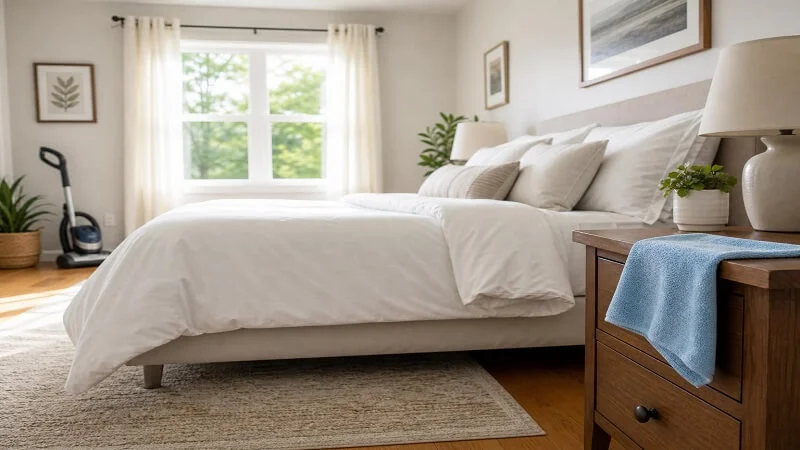
Designating a pet-free bedroom is one of the more effective steps for anyone dealing with allergy symptoms, since simply closing the door keeps allergens from piling up where they sleep [1][3]. Positioning pet beds and feeding areas away from sleeping spaces and HVAC intakes can further limit how far allergens travel.
Washable fabrics matter too. Pet bedding, blankets, and anything cloth that an animal touches regularly should be laundered according to the care label, using appropriate water temperatures. Pet supplies generally just need basic soap-and-water cleaning, with disinfection reserved for situations where it’s specifically called for and safe [4].
For furniture, washable slipcovers or throws offer a practical way to manage shedding without having to replace existing pieces. Low-pile rugs or hard flooring tend to be easier to maintain than wall-to-wall carpet, though ripping out flooring isn’t realistic for every household’s budget or timeline.
For example, a family might designate one pet-free bedroom, add washable covers to a frequently used sofa, and concentrate most of their cleaning effort in the living room and hallway—wherever their pet spends the most time. This kind of targeted approach is usually more sustainable than trying to overhaul an entire home all at once.
Use Cleaning Equipment More Effectively
No single tool performs equally well across carpet, hardwood, upholstery, and pet bedding, so it’s worth checking manufacturer guidance before relying on specific attachments. High-efficiency filtration can help capture fine particles during cleaning, though no device eliminates allergens entirely [1][5].
People with significant sensitivities may find it easier to have someone else handle the vacuuming, or to step out of the room and let disturbed dust settle before coming back in. Ongoing regular maintenance—emptying collection systems, checking filters, and avoiding shaking out dusty components indoors—helps equipment perform the way it’s supposed to over time. Filtration terminology and testing standards vary quite a bit between products, so it’s worth reviewing actual specifications rather than relying solely on marketing language.
Combine Cleaning With Pet and Air-Quality Practices
Routine grooming cuts down on the amount of loose fur entering the home in the first place, and ideally someone without allergies handles this task, preferably outdoors [1][3]. Bathing frequency should be guided by the animal’s species, coat type, and veterinary advice rather than some fixed schedule pulled from a calendar.
Replacing HVAC filters as the manufacturer recommends, and using air cleaners with appropriate filtration, may help reduce airborne particles—though these measures work best alongside surface cleaning, not as a substitute for it [1][3]. Cleaning chemicals should always be checked for safety around both pets and people before use.
Common Mistakes That Make Allergen Control Less Effective
- Focusing only on visible fur while ignoring dander and settled dust
- Dry-dusting surfaces and inadvertently spreading particles around
- Allowing pets into bedrooms despite ongoing symptoms
- Neglecting bedding, curtains, and car interiors
- Running equipment without maintaining filters
- Expecting a single cleaning session to solve the issue completely
What not to assume: The realistic goal is to reduce exposure rather than eliminate every allergen—perfection isn’t the standard to aim for here.
When to Seek Medical or Veterinary Guidance
Persistent sneezing, wheezing, coughing, or skin reactions may call for medical evaluation, and household cleaning should never substitute for prescribed treatment. Likewise, a pet showing excessive shedding, skin irritation, or unusual odor may need a veterinary visit. Severe or rapidly worsening breathing difficulty warrants urgent medical attention.
A Sustainable Home-Allergen Strategy
Reducing pet allergens works best as an ongoing framework: prioritize key rooms, clean fabrics and surfaces consistently, maintain equipment properly, stay on top of grooming, and improve filtration where it makes sense. Consistency matters more than perfection, and every household’s approach will look a little different depending on layout, pet type, and budget. A reasonable starting point is picking one high-impact change—establishing a pet-free bedroom, say, or building a weekly fabric-cleaning habit—and building outward from there.