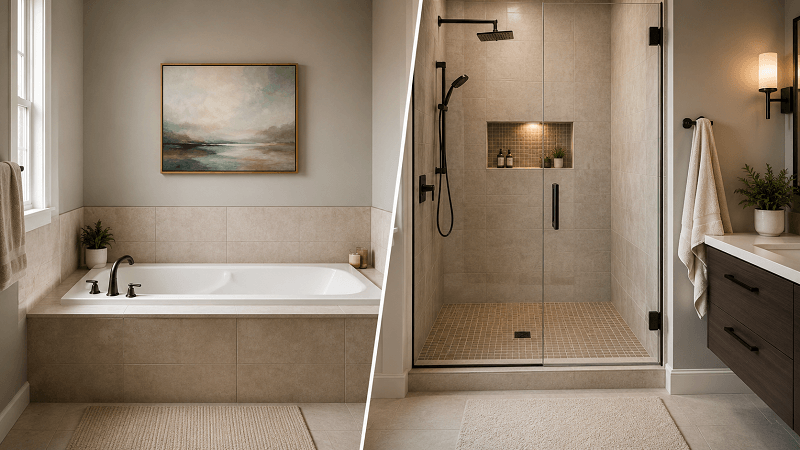
Key Takeaways
- Converting a bathtub to a shower maximizes accessibility and enhances everyday safety.
- This upgrade can increase home value and broaden buyer appeal.
- Modern showers are more space-efficient and visually appealing.
- Showers reduce cleaning time and create a healthier bathroom environment.
- Water usage is often lowered with shower installations, making them eco-friendly choices.
Updating your bathroom with a tub-to-shower conversion offers more than just a stylish makeover. This transformation enhances daily convenience while making your home more attractive and potentially more valuable. Homeowners are increasingly drawn to curbless shower installation for both practical benefits and contemporary design appeal.
A bathtub-to-shower conversion is often chosen for its ability to open up smaller bathrooms and make every square foot count. Beyond visual upgrades, a sleek walk-in shower can significantly decrease cleaning effort, support aging in place, and align with modern home trends. The ability to personalize fixtures, finishes, and styles puts you in control of your home’s aesthetic.
As bathroom trends evolve, more people are opting for showers not just for looks but also for the added comfort and efficiency they provide. Whether you are renovating for yourself or looking to boost your home’s marketability, this project can offer lasting rewards.
Additionally, planning a shower conversion can help you better serve diverse household needs, such as accommodating older adults or family members with mobility concerns, ensuring your home remains both welcoming and functional. According to a recent Architectural Digest feature on bathroom remodel trends, curbless showers have become a top request in home renovations.
Enhanced Accessibility and Safety
Traditional bathtubs often require a significant step up and over the side to enter, which can be challenging and dangerous, especially for children, seniors, or anyone with mobility issues. Walk-in showers with low or no threshold offer a safer, more accessible solution. Simple improvements, such as adding well-placed grab bars, handheld showerheads, and non-slip flooring, boost safety without compromising style. These upgrades can transform your bathroom into an age-friendly or universally accessible space, which is ideal for families planning for the long term.
Beyond basic accessibility, a shower can be equipped with modern features such as built-in benches, adjustable sprays, and even thermostatic controls that keep water temperature consistent. These additions create a more pleasant and worry-free experience for everyone in your household. Also, clear glass enclosures improve sight lines and illumination, adding another layer of safety and helping users avoid slips and falls, especially in dimly lit or compact spaces. Non-porous materials for walls and bases also contribute to cleaner, more hygienic surfaces that are less likely to harbor moisture or bacteria.
Increased Home Value
Bathroom renovations are consistently among the most valuable home upgrades, and shower conversions are frequently listed as high-ROI projects. Modern buyers seek updated bathrooms with contemporary features, and a walk-in shower can set your home apart in a competitive market. Research highlighted by Forbes Home notes that bathroom remodeling could return upwards of 60 percent on investment during resale, especially when it focuses on updated, practical features.
The perceived luxury of a well-designed shower replacement adds instant appeal during home showings. Walk-in showers offer a sense of spa-like comfort, making them a major selling point. Prospective homebuyers often look for spaces that require minimal updates, so a contemporary, low-maintenance shower can ease their concerns about future, costly renovations. Smart amenities, such as built-in shelving or rain showerheads, further distinguish your bathroom and add both function and value.
Space Optimization and Modern Aesthetics
Open Up Your Bathroom
Showers generally require less square footage than standard bathtubs, freeing up valuable floor space. Choosing a glass-door walk-in or a curbless model adds a sense of openness and modern sophistication. This not only makes bathrooms feel larger but also allows for more flexible layouts, creative tiling, or added storage. The design possibilities are nearly limitless, letting you personalize your shower with everything from patterned tiles to contemporary fixtures.
The switch from a bulky bathtub to a streamlined shower can also complement other bathroom upgrades, such as floating vanities or recessed lighting. Use of large-format tiles can minimize grout lines, making the bathroom look seamlessly integrated and visually expansive. For multi-purpose areas, incorporating built-in recesses or shelves can keep your necessities organized while maintaining a clutter-free environment. Modern shower doors, including sliding or pivot options, further enhance space-saving benefits.
Ease of Maintenance and Hygiene
Showers often offer easier upkeep than bathtubs. With fewer nooks and corners for grime, mold, or mildew to accumulate, maintaining cleanliness is more straightforward. Frameless glass doors, smooth walls, and low-profile bases keep maintenance simple, promoting a more sanitary bathroom environment. These upgrades can also support a faster daily cleaning routine and minimize the need for powerful chemical cleaners.
For homeowners who dread bathroom chores, this upgrade is especially appealing. Some shower materials, such as acrylic or high-quality composite panels, are designed to resist staining and do not require frequent sealing, unlike many traditional bathtub surrounds. Opting for built-in squeegees, water-repellent coatings, or easily removable showerheads can further minimize maintenance and maximize convenience, ensuring your upgraded bathroom stays sparkling clean with minimal effort.
Water Efficiency and Sustainability
Replacing a bathtub with a modern shower reduces water use for many households. Filling a tub uses significantly more water than a standard shower, so conversions support sustainability goals without compromising on comfort. Homeowners concerned about utility costs or environmental impact often find this benefit compelling. Water-saving showerheads or smart controls can further support eco-friendly living and reduce monthly bills.
Many municipalities now provide incentives or rebates for homeowners who invest in water- and energy-efficient fixtures. By choosing products certified by organizations like WaterSense, you can reduce waste and help protect local resources. Additionally, some shower systems recycle or pre-heat water for even greater environmental benefits, while eco-friendly materials for tiles and enclosures can complement your sustainability goals. Combined, these choices help create a bathroom upgrade that aligns with modern standards for green, healthy living.
What to Consider Before Your Tub-to-Shower Conversion
Before starting your bathroom remodel, consider your household’s makeup. If you have young children who prefer baths or plan to sell to families, keeping at least one bathtub can be important. Also, research local building codes and secure necessary permits before any work begins to avoid issues down the road. Consulting with a licensed contractor or bathroom specialist ensures your project meets both safety and resale standards.
It’s also wise to assess the condition of your existing plumbing and waterproofing before committing to a conversion, as older homes may require additional updates to meet code requirements and ensure long-term reliability. Explore various material options and ask about warranties, as quality components often lead to fewer repairs and lasting satisfaction. Make a detailed plan for fixtures, storage, and lighting to ensure your redesigned space meets your needs and maximizes comfort for everyone who will use it.
Conclusion
Converting from a bathtub to a shower is a practical way to increase your home’s usability, style, and value. Enhanced accessibility, improved safety, ease of cleaning, and modern design are all compelling reasons to consider this transformation. By planning and tailoring choices to your needs and tastes, you can enjoy a bathroom upgrade that offers immediate comfort and long-term benefits.
Whether your goal is to update an aging home, accommodate mobility needs, or give your space a modern refresh, a tub-to-shower conversion delivers on both function and form. Seek out reputable professionals, carefully select your fixtures and finishes, and view this investment as a way to enhance daily routines while preparing your home for future market demands.