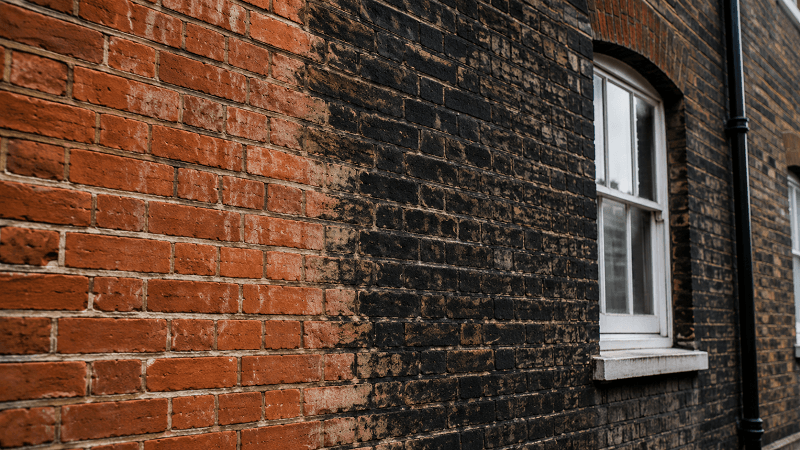
At some point, every London homeowner has the same realisation. You pause on your doorstep, look at your brickwork, and discover that the entire building now looks like the underbelly of the M25.
London’s brickwork has a talent for ageing in dog years, and it’s not just because the city is old. But before you start mentally pricing up a full rebuild, let’s take a look under the hood. Here’s what’s happening to your walls and why it’s cheaper to fix than you think.
Air Pollution
If London air can leave your trainers looking dusty after one day out, imagine what it has been doing to your brickwork over the course of 20 years.
Every single day, your house is hit by a massive cocktail of traffic fumes, construction grit, and a thick layer of grime.
The problem is that these particles don’t just float harmlessly past your house. Brick is naturally porous, so all that pollution slowly settles into the surface and builds up over time, especially on homes near busy roads or heavy traffic routes.
You usually won’t notice the change happening week by week. But after a few years, your brickwork will start looking noticeably darker, duller, and far more weathered than it used to.
Damp Patches
Pollution might start the problem, but rainwater is usually what pushes your brickwork over the edge.
Bricks are naturally porous, which means that every time it rains, they absorb moisture like giant clay sponges. And in London, where the weather can cycle through sunshine, drizzle, wind, and another surprise downpour before lunch, that’s happening constantly.
Over time, rain repeatedly hits the same spots, and moisture soaks deeper into the surface. You’ve probably noticed this on your own walls; there might be a few stubborn patches that remain damp even when the rest of the street has dried out.
To make matters worse, our climate rarely gives these bricks enough time to fully dry out between wet spells. So, instead of those dark spots fading away naturally, the moisture hangs around long enough for the stains and discolouration to settle in.
Moss and Algae
So, what happens when brickwork stays damp for long enough? Moss and algae basically see it as an open invitation to move in and make themselves comfortable.
These growths love shaded, wet surfaces, and once they settle in, they spread surprisingly fast across your brickwork. Before long, you’ll start noticing green streaks and dark patches on your walls.
You’ll usually spot the worst growths in areas that rarely get direct sun or airflow. Without warmth to dry the surface properly, the moisture lingers for longer, creating the perfect conditions for moss and algae to spread.
Old Soot
If you live in a classic Victorian or Edwardian terrace, your brickwork may still be carrying the legacy of decades of coal fires, chimney smoke, and old industrial pollution.
London’s air may be cleaner now, but a lot of that soot settled over the city’s buildings long before modern clean-air rules arrived.
And those old stains didn’t just sit on the surface waiting to be rinsed away by a bit of rain. Over time, the grime worked its way deep into the material itself, which is why some older homes still look permanently darkened.
After that much exposure to smoke and soot, your brickwork isn’t going to magically look cleaner after a few rainy afternoons.
Poor Drainage
Not all discolouration spreads evenly. If you’ve noticed dark streaks running down specific sections of your brickwork, your drainage is almost certainly to blame.
Overflowing gutters, leaking downpipes, blocked drains, and water collecting near the base of your house create concentrated moisture in the same spots every time it rains. So, instead of your wall drying evenly, those sections stay damp for longer.
And because the moisture keeps returning to the same areas over and over again, the stains gradually become darker and much more noticeable.
Organic Stains
Falling leaves, bird droppings, climbing plants, and decomposing garden debris can all leave marks behind if they sit against your walls for long enough.
Add rain to the mix, and those soggy leaves and droppings start staining the surface. Since brick is porous, the smudges slowly sink in instead of simply washing away with the next bit of rain.
While one small mark might not seem like a big deal on its own, all those stains start layering together over time.
Permanent Shade
You also have to factor in how tightly packed a lot of London streets are. With rows of terraces squeezed closely together, many houses barely get any direct sunlight at all.
Maybe your front wall faces north, or your neighbour’s extension now blocks the little afternoon light you used to get. Either way, your brickwork never gets a chance to fully dry out.
Without sunshine or steady airflow, moisture lingers on the surface, especially during winter. Over the years, that constant cycle of lingering moisture changes the appearance of your walls and makes the discolouration much harder to ignore.
Ageing Brickwork
All of these issues affect newer homes, too, but older brickwork tends to absorb the damage much more easily.
After decades of rain, traffic fumes, and damp weather, the bricks become rougher and darker over time. Once that happens, every new layer of dirt or staining has an easier time settling in and sticking around.
That’s why older walls often seem to discolour much faster, even when they’re exposed to the same conditions as newer properties nearby. Your walls have simply spent longer battling the elements, and eventually, they start showing their age, whether you like it or not.
How to Clean Your Walls
Luckily, your walls aren’t permanently ruined. In fact, pressure washing can take care of most of these marks.
But the important thing is using the right pressure and cleaning method. When it comes to older London properties, the bricks can be much softer and more delicate than they look.
So, there’s a real chance you’ll damage the surface if you DIY it and attack the wall with maximum pressure.
If you are looking into professional pressure washing, Clapham has no shortage of specialists who deal with stained brickwork every day.
For lighter stains, a professional wash will easily strip away the moss, algae, and surface dirt that a regular garden hose can’t get rid of. You may also need specialised treatments alongside low-pressure washing to lift the dirt without damaging the brick underneath.
Conclusion
You don’t need to pack your bags or take out a second mortgage to get that kerb appeal back.
So, take a deep breath, close those property search apps, and call in the experts. Your house has stood the test of time, and a little bit of care now will keep it looking sharp for years to come.